
 EN
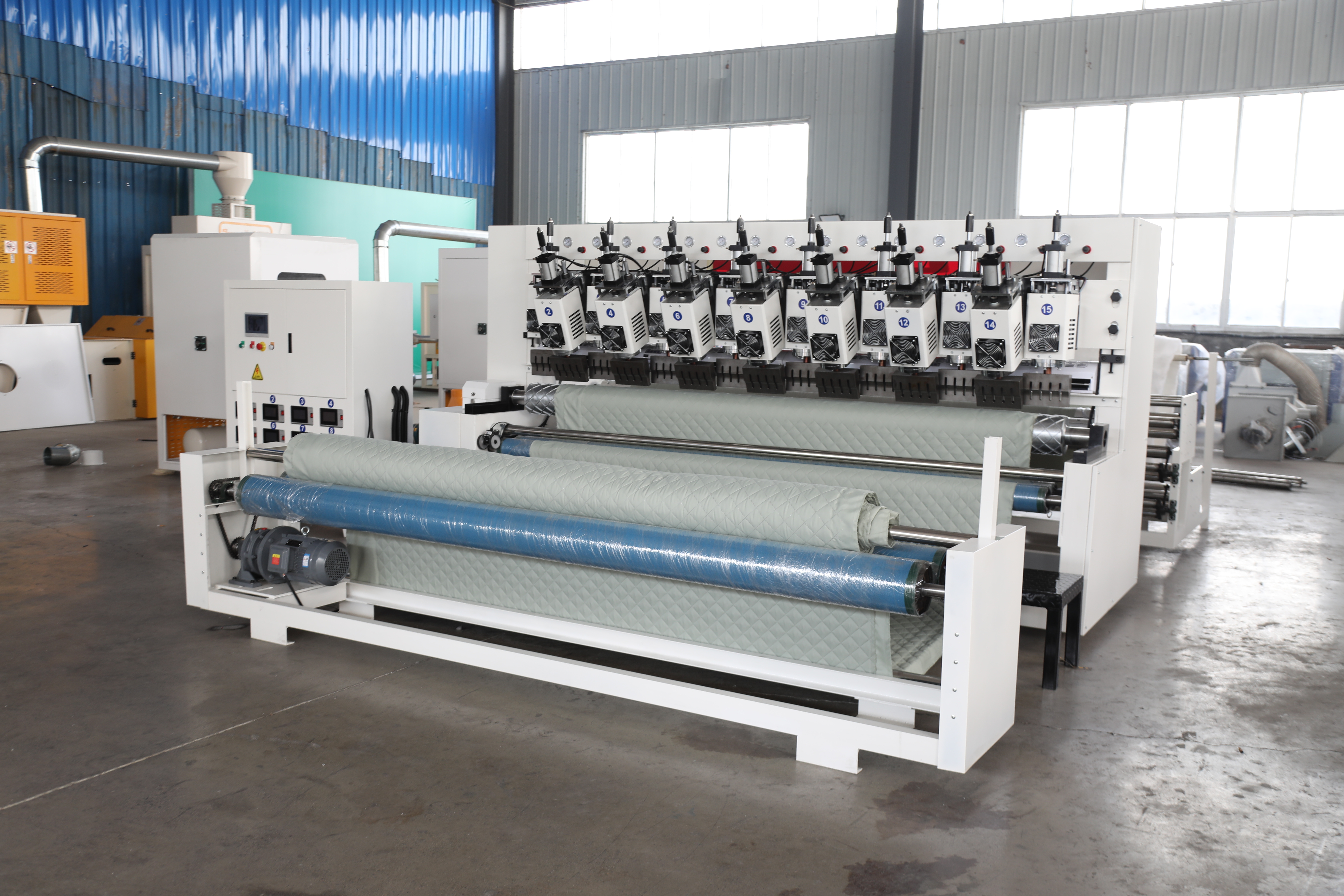
How High-Frequency Ultrasonic Machines Enable Burr-Free, Seamless Edges
The Role of 20–40 kHz Vibration in Precision Edge Formation
High-frequency ultrasonic machines drive their cutting horn at 20,000–40,000 cycles per second—producing a near-invisible reciprocating motion that fundamentally changes how material separates. Unlike static blades that rely on continuous pressure, ultrasonic vibration allows the tool to repeatedly enter and exit the workpiece, drastically reducing forward cutting force and lateral deformation. In thermoplastics, this prevents smearing and roll-over; in composites, it severs fibers before they can be pulled or frayed. The rapid axial motion creates a localized high-pressure zone that cleanly separates material, yielding smooth, sealed edges with minimal need for secondary deburring or sanding.
Frequency within the 20–40 kHz range can be tuned to match material hardness, thickness, and thermal behavior—giving operators precise control over edge quality. This adaptability distinguishes ultrasonic processing from conventional mechanical cutting, which commonly leaves micro-burrs and demands post-processing. By maintaining consistent vibration in this band, the system delivers repeatable, burr-free seams across rigid and flexible substrates alike.
Core Working Principle: Energy Conversion, Micro-Impact Mechanics, and Localized Thermal Softening
Ultrasonic edge formation begins when an ultrasonic generator converts line power into a high-frequency electrical signal matched to the system’s resonant frequency. A piezoelectric transducer then transforms that signal into mechanical vibration, amplified by a booster or sonotrode before reaching the cutting edge. At the blade tip, oscillation generates millions of micro-impacts per second—each removing only a thin layer of material. This limits total cutting force and prevents tearing.
Because the blade moves faster than the material can plastically deform, friction at the interface induces brief, highly localized thermal softening—enough to aid separation but not enough to cause widespread melting or heat-affected zones. Surrounding material remains cool and dimensionally stable—a critical advantage for thin films, layered composites, and precision fabric edges. The synergy of energy conversion, micro-impact mechanics, and controlled thermal release produces clean, sealed seams—free of burrs, loose fibers, or delamination.
Material-Specific Optimization for Seamless Finishes on Thermoplastics and Composites
Thermoplastics: Amplitude-Controlled Melting-Edge Integrity at 20–30 kHz
Operating within 20–30 kHz, ultrasonic systems deliver precisely controlled vibratory energy to thermoplastic edges—where amplitude directly governs heat generation and melt flow. For amorphous polymers like acrylic or polycarbonate, moderate amplitude (15–30 µm) gradually softens the edge without inducing stress cracking, yielding smooth, optically clear seams. Semicrystalline materials—including polypropylene and PET—require slightly higher amplitude to overcome sharp melting transitions, but excessive amplitude causes flash and dimensional drift.
Fine-tuning amplitude to resin-specific thermal response enables burr-free edges with surface roughness average (Ra) below 1 µm. Localized melting also preserves molecular orientation near the seam—enhancing edge strength. To prevent over-melting or collapse, contact time must remain tightly controlled. Closed-loop amplitude regulation ensures consistent quality across varying part thicknesses and resin grades, while avoiding charring that compromises optical clarity in transparent components.
Composites: Minimizing Delamination and Fraying via Low-Heat, Focused Energy Delivery
Composite edge finishing prioritizes mechanical precision over bulk heating. Ultrasonic systems minimize thermal input by concentrating mechanical energy at the fiber–matrix interface. For glass- or carbon-reinforced laminates, low amplitude (10–20 µm) and short exposure prevent resin degradation and interlaminar delamination. As the horn compresses and vibrates the edge at ultrasonic speed, frictional heat is confined to a narrow zone—softening the matrix just enough to trim and seal fibers simultaneously. This eliminates fraying and micro-cracking without propagating heat into the laminate core—preserving interlaminar shear strength.
Real-world validation shows lower peel resistance loss and fewer edge defects after ultrasonic trimming versus alternative methods. For advanced thermoplastic composites, amplitude must balance fiber integrity against sealing efficacy—especially critical in aerospace and medical applications where edge quality directly influences fatigue life and long-term reliability.
Key Vibration Parameters That Directly Influence Surface Finish Quality
Amplitude, Frequency Range (19–25 kHz), and Their Combined Effect on Ra, Tolerance, and Material Removal Rate
In ultrasonic edge processing, amplitude (peak-to-peak displacement) and frequency (impacts per second) jointly determine energy delivery—and thus surface finish. Within the 19–25 kHz band, lower frequencies often support higher amplitude without overloading the transducer. For thin thermoplastic edges, amplitudes of 10–20 µm typically achieve Ra < 1.6 µm and maintain geometric tolerance within ±0.05 mm.
Material removal rate increases nearly linearly with amplitude at a fixed frequency—but excessive amplitude deepens micro-impacts, raising Ra and widening edge tolerance. Frequency also modulates heat distribution: lower frequencies deliver fewer, stronger impacts; higher frequencies spread energy more evenly. Stable tuning within 19–25 kHz avoids resonance drift, which can cause inconsistent cuts and rougher surfaces. Process engineers routinely map amplitude–frequency response curves to lock in optimal Ra and tolerance for each material—enabling the ultrasonic machine to balance high removal rates with consistently smooth, burr-free edges across production runs.
Real-World Validation: Case Study in Textile Edge Sealing with Ultrasonic Machine Performance Metrics
Ultrasonic edge sealing has been validated across technical textile applications where seam integrity, barrier performance, and dimensional stability are non-negotiable. In waterproof apparel, continuous ultrasonic welding produced seams with superior uniformity and significantly fewer needle-hole leak paths than traditional stitching—a finding confirmed in a peer-reviewed 2016 study published in Textile Research Journal. Subsequent evaluation of ultrasonically welded textile composites used in protective footwear measured tensile strength, elongation at break, and delamination resistance—all improved relative to sewn alternatives (2019).
A comparative analysis of assembly techniques for textiles in pneumatic devices further demonstrated that ultrasonic edge sealing delivered repeatable, burr-free geometry with minimal thermal distortion. Outcomes—including reduced fraying, stable seam profiles, and enhanced liquid and air barrier performance—underscore why manufacturers increasingly adopt this method for high-performance technical textiles.
FAQ
What is the main advantage of high-frequency ultrasonic machines?
High-frequency ultrasonic machines drastically reduce forward cutting force and lateral deformation by using high-speed vibration, resulting in burr-free and seamless edges with minimal post-processing.
How does ultrasonic vibration help in cutting materials?
Ultrasonic vibration allows the tool to repeatedly enter and exit the workpiece at high speeds, creating localized high-pressure zones that cleanly separate materials without smearing or deformation.
Can ultrasonic systems be adjusted for different materials?
Yes, the frequency range of 20–40 kHz can be tuned to match the hardness, thickness, and thermal behavior of different materials, ensuring optimal cutting and edge quality.
How does ultrasonic processing benefit thermoplastic materials?
For thermoplastics, controlled vibratory energy ensures precise edge melting with minimal melting or collapse, resulting in smooth surfaces and maintaining the material's structural integrity.
What advantages do ultrasonic systems offer for composite materials?
For composites, ultrasonic systems focus mechanical energy at fiber–matrix interfaces, minimizing thermal input and preventing delamination, fraying, and micro-cracking for clean and strong edges.
What is the significance of amplitude and frequency in ultrasonic processing?
Amplitude and frequency jointly impact energy delivery, surface finish, and material removal rates. Careful tuning within the 19–25 kHz range ensures optimal edge quality and minimized defects.
Table of Contents
-
How High-Frequency Ultrasonic Machines Enable Burr-Free, Seamless Edges
- The Role of 20–40 kHz Vibration in Precision Edge Formation
- Core Working Principle: Energy Conversion, Micro-Impact Mechanics, and Localized Thermal Softening
- Material-Specific Optimization for Seamless Finishes on Thermoplastics and Composites
- Key Vibration Parameters That Directly Influence Surface Finish Quality
- Real-World Validation: Case Study in Textile Edge Sealing with Ultrasonic Machine Performance Metrics
- FAQ