
 EN
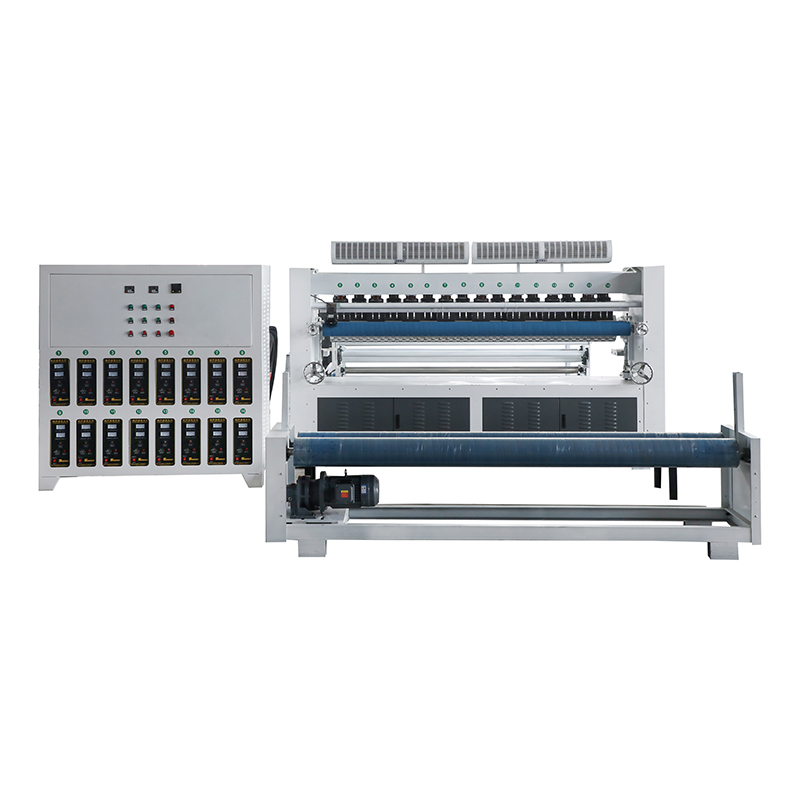
How Ultrasonic Machines Eliminate Thread-Based Limitations
The Physics of Bonding: High-Frequency Vibration and Molecular Fusion
An ultrasonic machine converts electrical energy into high-frequency mechanical vibrations—typically 20–40 kHz—which travel through a sonotrode to the material interface. Under controlled pressure, rapid oscillatory motion generates localized frictional heat at the contact point. This heat selectively melts thermoplastic fibers just enough to fuse polymer chains, creating a true molecular bond. As the material cools under pressure, the fused chains solidify into a continuous, thread-free seam. Because the bond forms within the material rather than across it, there are no stitch holes to compromise integrity. The process is fast, repeatable, and highly compatible with automated quilting lines. Seam strength and appearance are precisely tunable via amplitude, pressure, and dwell time—enabling consistent performance across diverse substrates.
Material Integrity Advantage: No Needle Damage or Thread Tension Distortion
Traditional quilting introduces needle perforations that act as stress concentrators, increasing susceptibility to tearing under load and creating pathways for moisture, microbes, or particulates. Thread tension further distorts lightweight, stretch-sensitive, or laminated fabrics—especially problematic in medical gowns, filtration media, and automotive composites. Ultrasonic bonding eliminates both failure modes: it fuses surfaces without puncturing the substrate, preserving tensile strength near original fabric values, and removes thread paths entirely—so there’s no risk of unraveling, tension drift, or uneven stress distribution. The resulting sealed edge resists fraying, maintains barrier functionality, and reduces or eliminates the need for secondary seam sealing. For B2B converters, this translates directly into fewer quality rejections, higher first-pass yield, and more predictable seam performance across technical textiles.
Traditional Quilting Methods: Structural Reliance and Operational Constraints
Traditional quilting relies on thread-based mechanical interlocking—a method that imposes inherent structural and operational limits. The two subsections below clarify how its foundational mechanics differ from ultrasonic bonding—and why those differences manifest as real-world trade-offs.
Mechanical Interlocking vs. Thermal Bonding: Fundamental Process Differences
Traditional quilting uses a reciprocating needle to pierce layered fabric and pull thread through, forming discrete mechanical anchors. Each stitch consumes thread, requires precise tension control, and inevitably damages fibers at the puncture site—creating micro-tears and stress concentrations. In contrast, ultrasonic bonding applies high-frequency vibration to generate localized heat only where layers meet, softening thermoplastic polymers into a continuous, homogeneous bond. No needle, no thread, no perforation. Strength derives from molecular cohesion—not stitch density—making the bond inherently more uniform and less dependent on operator skill or machine calibration. This fundamental distinction—fastening from outside versus joining from within—drives measurable gaps in seam durability, breathability, and process reliability.
Trade-Offs in Practice: Stitch Density, Breathability, and Seam Failure Risk
High stitch density is often used in traditional quilting to compensate for weak individual anchors—but each added puncture further degrades fabric integrity and restricts airflow. Dense seams impede moisture vapor transmission and air permeability, limiting suitability for medical PPE, outdoor apparel, and filtration membranes. Thread-based seams also wick liquids, fray at stitch points, and fail catastrophically under cyclic loading. Field data from 2023 shows thread breakage and tension drift account for up to 22% of unscheduled downtime on quilting lines. Once a stitch fails, adjacent stitches bear disproportionate load—accelerating seam opening in a cascading failure mode. Ultrasonic bonding avoids these pitfalls entirely: the flat, sealed seam offers superior breathability, no wicking pathways, and resistance to rupture under repeated stress. For B2B buyers, this means fewer production rejects, extended product service life, and significantly lower maintenance burden.
Ultrasonic Machine Performance Metrics: Speed, Precision, and Waste Reduction
For high-volume or high-mix quilting operations, ultrasonic bonding shifts key performance indicators—from mechanical throughput to precision, consistency, and material efficiency.
Cycle Time Gains: 42% Average Improvement in High-Mix Production (Smithers Pira, 2024)
Ultrasonic machines deliver an average 42% reduction in cycle time for high-mix production, according to Smithers Pira’s 2024 industry benchmark report. This gain stems primarily from eliminating thread changes, bobbin monitoring, and needle replacements—processes that often dominate changeover time in traditional quilting. Continuous roll-to-roll motion enables seamless transitions between product variants, while precision tooling ensures consistent bond width and placement. Tighter dimensional tolerances reduce fit-related rework, and faster start-up times increase effective output per shift. These advantages compound in complex production environments, where ultrasonic systems often cut total line stoppages by more than half.
Zero-Thread Waste and Reduced Rework: Impact on Yield and Sustainability KPIs
By removing thread entirely, ultrasonic bonding eliminates direct material waste—and more importantly, the hidden costs of thread-related defects: skipped stitches, tension mismatches, needle breaks, and seam slippage. First-pass yield improves measurably, and rework drops sharply. Manufacturers tracking sustainability metrics see lower material waste per unit, reduced energy consumption from fewer reprocessing cycles, and less lint and airborne dust—improving both workplace safety and equipment longevity. Quality assurance also becomes more objective: inspections focus on quantifiable parameters like bond width and peel strength rather than subjective stitch counts. The result is faster audits, tighter process control, and stronger alignment with ESG reporting goals.
Total Cost of Ownership for B2B Quilting Operations
For B2B buyers, evaluating quilting systems solely on purchase price overlooks critical lifecycle expenses. Total Cost of Ownership (TCO) includes acquisition, installation, energy, consumables, labor, maintenance, unplanned downtime, and residual asset value. Traditional quilting incurs recurring variable costs for thread, needles, bobbins, lubricants, and the labor required to manage them—plus downtime from thread breaks, tension recalibration, and needle damage. Ultrasonic bonding shifts spending toward a more predictable fixed-asset model: minimal consumables, lower mechanical wear, reduced rework, and fewer stoppages.
| TCO component | Traditional quilting | Ultrasonic quilting |
|---|---|---|
| Consumables | Thread, needles, bobbins, lubricants | Minimal or none |
| Maintenance | Frequent needle and tension checks | Lower mechanical wear; simplified diagnostics |
| Energy | Higher due to motor loads and auxiliary drying | Often lower per unit output—no thread heating or drying needed |
| Rework | Seam slippage, thread breaks, skipped stitches | Significantly reduced seam failure risk |
| End-of-life | Standard resale and parts value | Specialized but growing resale demand, supported by OEM upgrade paths |
This TCO profile delivers strongest ROI in high-mix or high-volume settings—where thread waste, changeover delays, and rework compound rapidly. Lower procurement complexity, improved yield, and enhanced sustainability metrics further strengthen the business case. B2B buyers should model full-lifecycle cost—not just upfront price—because ultrasonic systems frequently lower per-unit production cost, even when initial investment is higher.
FAQs
What is the main advantage of ultrasonic bonding over traditional quilting?
Ultrasonic bonding eliminates the need for needles and thread, preserving material integrity, reducing defects, and creating stronger and more durable seams through molecular bonding rather than mechanical stitching.
What types of fabrics are best suited for ultrasonic bonding?
Fabrics with thermoplastic properties, such as medical gowns, filtration media, and automotive composites, are ideal for ultrasonic bonding due to their ability to fuse at a molecular level under high-frequency vibration and heat.
How does ultrasonic bonding improve production efficiency?
Ultrasonic machines reduce cycle time by 42% on average by eliminating thread changes, bobbin replacements, and frequent maintenance. Their precise and quick operation also leads to fewer defects and reduced rework.
Is ultrasonic quilting sustainable?
Yes, ultrasonic bonding eliminates thread waste, reduces rework, cuts energy use, and lowers lint and dust production, aligning better with sustainability goals and ESG reporting metrics.
What is the Total Cost of Ownership (TCO) difference between traditional quilting and ultrasonic quilting?
Ultrasonic quilting typically has lower long-term costs as it requires minimal consumables, has less mechanical wear, and reduces downtime and maintenance compared to traditional quilting, despite a higher initial investment.