
 EN
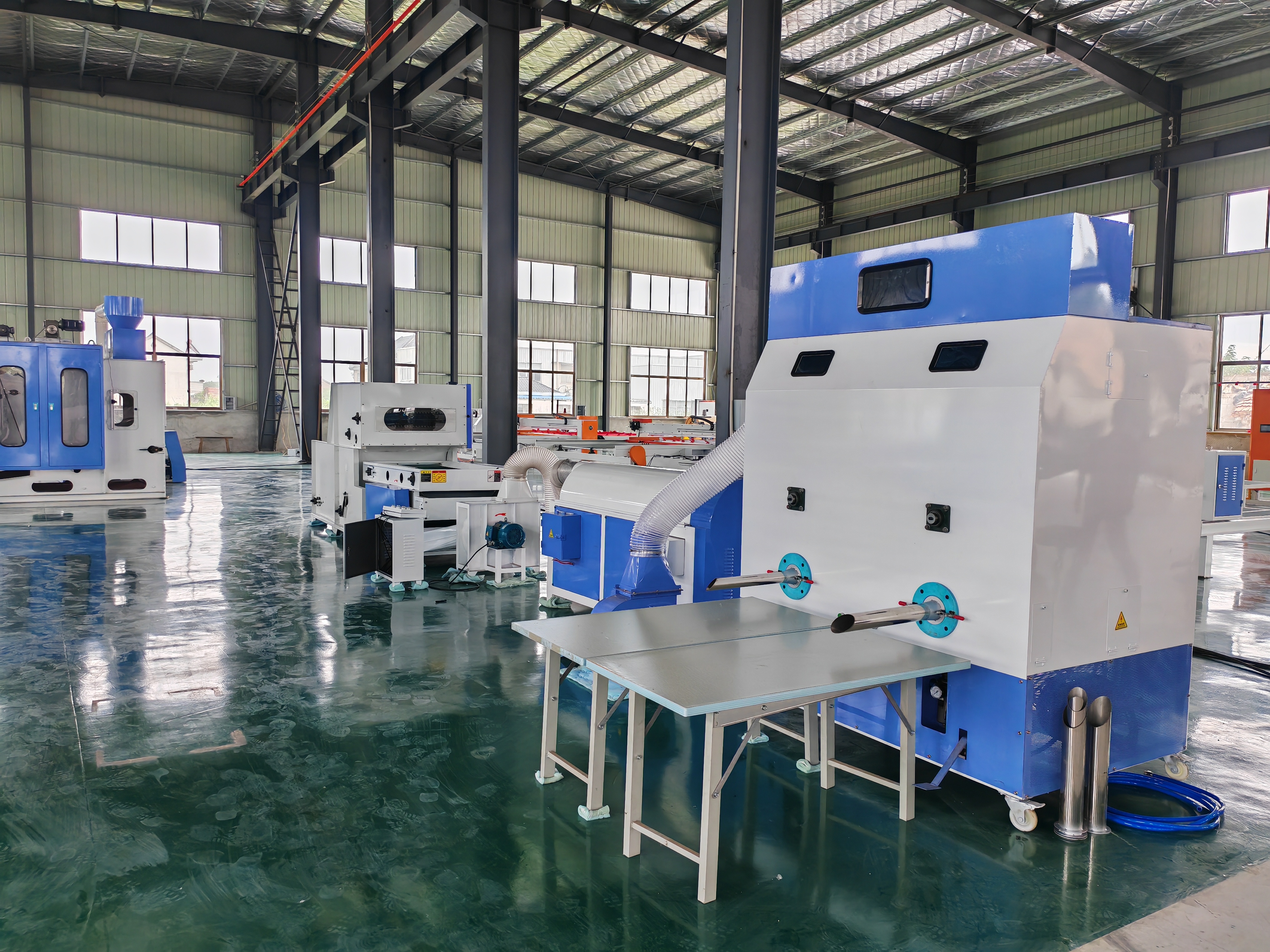
Core Functionality of a Textile Waste Recycling Machine
A textile waste recycling machine converts fabric scraps and discarded garments into reusable fibers through physical, chemical-free processes. Its core functionality hinges on input flexibility and a reliable, automated sequence: sorting, shredding, and fiber liberation.
Input Requirements: Compatibility with Pre-Consumer Scraps and Common Fabric Types
Success begins with compatible feedstock. Most machines are optimized for pre-consumer scraps—clean, dry off-cuts from cutting rooms and factories—where fiber composition is known and contamination is minimal. They handle cotton, polyester, wool, and acrylic efficiently, whether in pure form or simple cotton/polyester blends. Heavily blended fabrics containing elastane, nylon, or multiple fiber types pose significant challenges: mechanical separation cannot isolate individual polymers, limiting downstream usability. Dirt, metal fasteners, and non-textile trims (e.g., zippers, buttons) must be removed before feeding; many systems include integrated pre-cleaning modules or rely on upstream manual picking. Mills processing single-fiber waste—such as 100% cotton cutting scraps—achieve the highest consistency in recycled fiber quality and avoid cross-contamination that shortens staple length.
Key Workflow Stages: Automated Sorting, Mechanical Shredding, and Fiber Liberation
With clean feedstock in place, the machine executes three tightly coordinated stages. First, automated sorting uses near-infrared (NIR) sensors and color cameras to identify fiber type and hue; air jets or mechanical gates then route each piece to a dedicated bin, ensuring uniformity in subsequent processing. Next, rotating drums fitted with hardened steel blades shred textiles into fist-sized fragments—reducing bulk while dislodging residual contaminants, which are removed via suction or gravity. Finally, a carding-type opening system liberates individual fibers: spiked rollers and precisely calibrated gaps pull apart the mass at natural splitting points, forming a continuous web. Lubricating oils may be applied during this stage to reduce friction-induced breakage. The resulting fiber can be baled for transport or fed directly into blending or non-woven production lines—completing a low-chemical, mechanical recycling loop.
Engineering Principles Behind the Textile Waste Recycling Machine
Shredder-Extruder Integration for Efficient Fiber Separation
For synthetic-rich scrap, advanced textile waste recycling machines often integrate a heavy-duty shredder with a heated single-screw extruder. Pre-shredded fabric—reduced to ~10-mm flakes—enters the extruder barrel, where friction and external heating raise temperatures above the melting point of thermoplastic fibers like polyester or nylon. The molten polymer passes through a fine-mesh screen pack that retains unmelted components (e.g., cotton, elastane), effectively separating man-made from natural fractions. This integration bypasses labor-intensive manual sorting of blends and delivers a purified melt suitable for direct pelletization into raw material for new filament yarns. With the global textile sector consuming an estimated 234 million tonnes of raw materials in 2022 (European Environment Agency), such systems significantly reduce dependence on virgin synthetics. Leading facilities report over 95% purity in recovered polyester—making shredder-extruder integration a cornerstone of closed-loop synthetic textile manufacturing.
Carding and Opening Systems That Preserve Fiber Length and Usability
After size reduction, liberated fibers pass through opening and carding systems designed to gently separate clumps and align strands without excessive damage. Opening units use pinned rollers rotating at controlled differential speeds to tease apart entangled bundles; carding then employs fine wire-clothing to parallelize fibers, remove short neps, and form a uniform web. Critical to performance are gap settings and tooth geometry—calibrated to minimize tensile stress, since mechanical action inherently shortens staple length. As noted in a 2023 textile engineering review, aggressive recycling can reduce staple length by up to 30%, but optimized parameters typically limit degradation to under 15%. Spinners commonly blend reclaimed fibers with 15–20% virgin cotton to offset minor length loss, ensuring final yarns meet strength and evenness standards for apparel and home textiles.
Practical Applications: In-House Recycling of Production Scraps
Operational Benefits for Textile Manufacturers: Cost Savings, Traceability, and Reduced Logistics
Integrating a textile waste recycling machine directly into production workflows enables manufacturers to convert cutting-floor waste and off-spec fabric into usable fiber on-site. This eliminates virgin material procurement costs and disposal fees—closed-loop scrap recovery can reduce total material costs by up to 5–10% in high-waste operations (Industry data, 2024). Because scraps are processed under controlled conditions and reintroduced immediately to the same line, origin and composition remain fully traceable—a key advantage for brand integrity and regulatory compliance. External logistics vanish: no hauling bales to third-party recyclers, no waiting for processing turnarounds, and no transport surcharges. Instead, a seamless, same-day cycle transforms waste from a cost center into a dependable, low-risk fiber source—shortening raw material lead times and insulating production from volatile supply markets. This operational simplicity also supports lean inventory practices and strengthens sustainability reporting.
Limitations and Realistic Expectations for Blended Fabric Recycling
Blended fabrics—especially cotton-polyester—dominate post-consumer textile waste, representing over 60% of discards (Refashion, 2023). Conventional textile waste recycling machines, built for mechanical shredding and opening of pure fibers, hit a fundamental bottleneck with physically entangled blends: mechanical forces cannot separate cotton from polyester without grinding both into short, weak lint unsuitable for high-grade yarn spinning. Consequently, over 99% of blended textiles are downcycled—less than 1% achieve true closed-loop reuse (Ellen MacArthur Foundation, 2017). While chemical recycling methods can depolymerize one component (often polyester) from cellulose, they require hazardous solvents, high energy inputs, and rigorous pre-sorting—keeping costs well above those of virgin fiber.
In practice, textile waste recycling machines deliver strong performance only with pure, pre-sorted pre-consumer streams—such as 100% cotton or polyester off-cuts. When fed mixed materials, output is low-value shoddy, fit only for insulation, stuffing, or industrial wiping rags—not remanufacturing into new garments. Until advances in sorting automation, scalable chemical depolymerization, and design-for-disassembly mature, blended fabric recycling remains a niche, high-cost activity that supplements—not replaces—virgin fiber consumption.
FAQ Section
What types of fabric can textile waste recycling machines process?
These machines are optimized for pre-consumer scraps such as cotton, polyester, wool, and acrylic. Pure or simply blended materials are ideal, as heavily mixed fabrics pose challenges for downstream usability.
How do textile waste recycling machines separate fibers?
They employ automated sorting, mechanical shredding, and fiber liberation techniques. Advanced systems may integrate shredder-extruder setups for better separation of synthetic-rich materials.
Why aren't blended fabrics effectively recycled?
Blended fabrics like cotton-polyester are difficult to separate mechanically, resulting in output unsuitable for high-grade applications. Current limitations make recycling these materials expensive and less efficient.
What are the operational benefits for manufacturers using these machines?
Manufacturers can reduce material costs by recycling scraps on-site, ensuring traceability, and avoiding logistics-related expenses. This contributes to sustainability and production independence.