
 EN
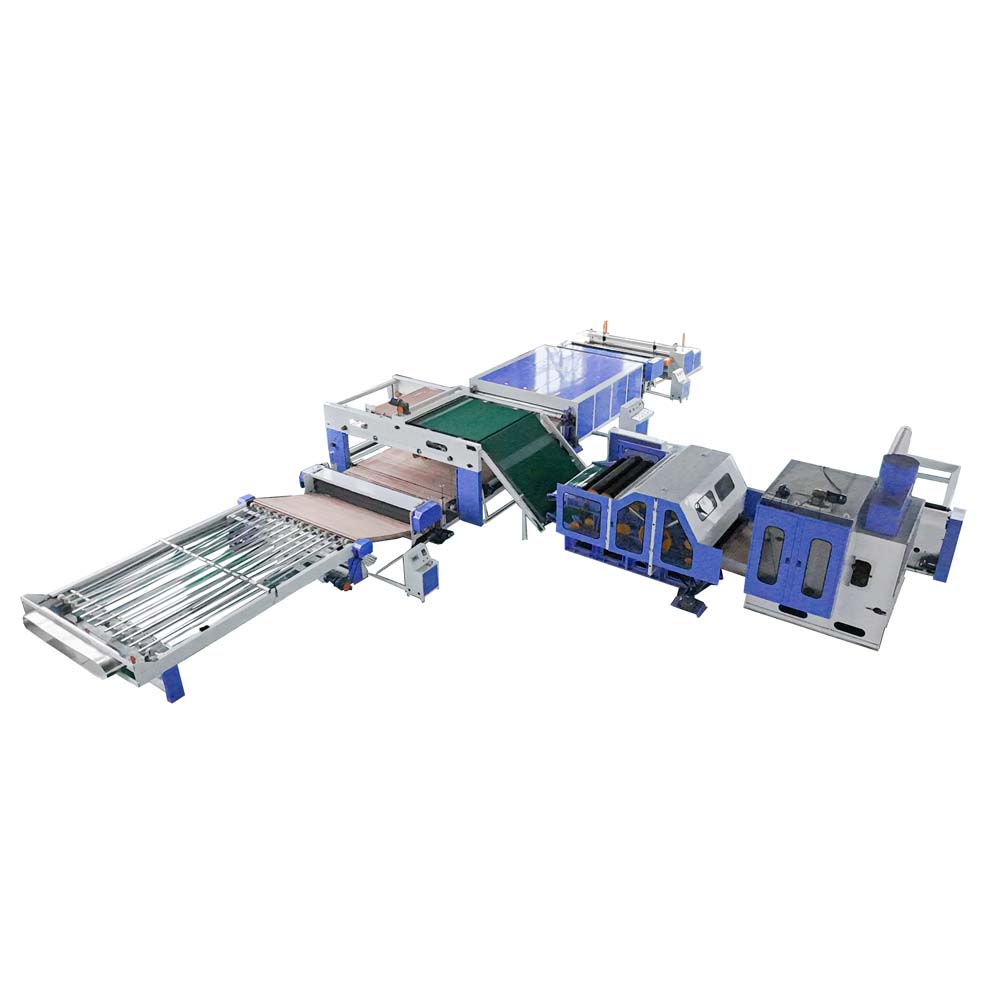
Why Enterprises Are Adopting Computerized Quilting Machines in 2026
Meeting Demand for Mass Customization and Faster Time-to-Market
The rise of direct-to-consumer e-commerce—driving global online fashion sales growth of over 12% annually—is pressuring textile manufacturers to deliver highly personalized quilts in days, not weeks. Mass customization has shifted from a luxury add-on to a market necessity, and computerized quilting machines meet this demand by automating intricate stitch patterns while scaling seamlessly from one-off commissions to small-batch production—no retooling required. Automated workflows can increase output by up to 40% versus manual methods, slashing turnaround times and enabling just-in-time fulfillment for pop-up collections or seasonal drops. Integrated digital tools allow real-time design previews, on-demand order edits, and rapid shipping—all without inflating per-unit costs. This responsiveness delivers a decisive competitive edge in a market where speed consistently converts to sales.
Calculating ROI: Labor Savings, Reduced Rework, and Higher Throughput
Beyond revenue acceleration, the return on investment crystallizes in measurable operational gains. Automated pattern execution and fabric-aware stitch logic cut skilled-labor hours by roughly half on complex orders. Industry data shows digital quilting systems reduce fabric waste by up to 30%, directly lowering material costs and rework volumes. Faster cycle times also boost throughput: a single machine can process 15–20% more orders per shift, converting fixed overhead into scalable profit. For enterprises prioritizing agility and margin expansion, these efficiencies typically yield a payback period under 18 months—not only in dollars saved, but in freed capacity dedicated to higher-value custom work.
Top 5 Enterprise-Grade Computerized Quilting Machines for 2026
As enterprises scale up production, the right computerized quilting machine becomes a cornerstone of efficiency and quality. The following models represent the most advanced solutions for 2026, each designed to meet specific production demands.
Brother PR680W: Networked Multi-Head Precision for Mid-Scale Production
The PR680W is a networked multi-head system that leverages synchronized needle control to deliver consistent stitch quality across multiple workstations. Built-in Wi-Fi enables remote job queuing and real-time production monitoring. Its five-hoop capacity minimizes changeover time, while dual LCD touchscreens simplify parameter adjustments. AcuFeed and QuiltBlockAdvisor tools maintain tension and block alignment automatically—reducing rework and operator dependency. For mid-scale facilities producing custom quilts on demand, the PR680W delivers flexibility and repeatable precision, cutting labor costs by up to 30% compared to single-head setups.
Janome Memory Craft 15000E: AI-Assisted Pattern Scaling and Fabric-Aware Stitch Logic
The Memory Craft 15000E uses AI-assisted pattern scaling to dynamically adjust stitch density and seam allowances based on real-time fabric analysis. Its integrated camera scans material thickness and weave, feeding data to an algorithm that optimizes needle penetration—whether stitching delicate silk or heavy denim. This fabric-aware logic significantly reduces puckering and thread breaks, allowing mixed-fabric batches without manual recalibration. With Wi-Fi connectivity and cloud-linked design apps, it streamlines file transfer and remote troubleshooting. For B2B shops delivering branded merchandise, the 15000E ensures consistent, high-fidelity embroidery-quilt integration across every unit—cutting design-to-production time in half and minimizing material waste.
Bernina Q24 Longarm: Industrial-Grade Frame Integration and Cloud-Based Job Queuing
The Q24 Longarm pairs a 24-inch throat space with a robust 10-foot frame, accommodating quilts up to 115 inches in a single pass. Advanced stitch regulation maintains consistent stitch length even at high speeds, while dual handwheels offer precise operator control from either side. Cloud-based job queuing allows production managers to schedule sequences remotely and monitor utilization via a centralized dashboard. Features like the built-in needle threader, large LCD interface, and automatic tension adjustment for varying batting types accelerate setup and improve repeatability. For enterprises specializing in oversized quilts or commercial bedding, the Q24 cuts turnaround time by up to 40% while delivering professional-grade consistency.
Selecting the Right Computerized Quilting Machine by Business Model
E-commerce Fulfillment: Prioritizing Speed, Auto-Color Matching, and Small-Batch Flexibility
E-commerce fulfillment requires machines built for velocity and agility. Prioritize systems delivering at least 1,000 stitches per minute and seamless pattern recall to support same-day order processing. Auto-color matching—scanning thread spools and recommending exact replacements—ensures brand-consistent color fidelity across dozens of daily small-batch runs. Modular hoops and on-screen editing further streamline frequent design changeovers without recalibration delays. According to 2025 operational benchmarks from high-volume Etsy studios, mid-range computerized systems cut average order-to-ship time by 40% versus manual setups—making them essential for meeting marketplace SLAs.
Boutique B2B Contracts: Emphasizing Embroidery-Quilting Hybrid Capabilities and Brand-Consistent Output
Boutique B2B contracts demand seamless integration of quilting and embroidery—delivering a unified, branded finish in a single workflow. Hybrid-capable machines eliminate secondary processes, preserving fabric integrity and guaranteeing uniform output across multi-unit orders. Look for built-in digitizing software, adjustable presser foot pressure, and automated features like thread trimming and tension calibration to handle diverse materials—from fine silks to heavy canvas. When a leading hospitality supplier adopted such a hybrid system in 2024, defective units fell by 22%, and a 500-unit order shipped three days ahead of schedule. These capabilities strengthen your position as a strategic, quality-driven partner—not just a vendor.
Total Cost of Ownership and Support Models for Enterprise Deployment
For enterprise-grade computerized quilting machines, upfront cost is only the entry point. Total Cost of Ownership (TCO) includes hardware, installation, software licensing, energy use, operator training, unplanned downtime, and lifecycle management. A decade-long analysis of cloud-enabled production equipment shows subscription-based software updates and remote diagnostics reduce total costs by 30–50% compared to legacy on-premise systems (Bizowie 2024). Applied to networked quilting platforms, this model transforms recurring fees into predictable budget line items—and lowers long-term risk.
Equally critical is support infrastructure. Enterprises should prioritize vendors offering proactive maintenance agreements: real-time performance monitoring, guaranteed parts availability, and same-day remote troubleshooting—key to sustaining throughput above 90%. Annual service contracts bundling on-site visits, software upgrades, and operator recertification can cut unplanned downtime by up to 35%, protecting delivery schedules. A hybrid support structure—combining local technical partners with manufacturer-backed cloud diagnostics—ensures consistent output quality across multi-site deployments without expanding internal IT overhead.
FAQ
What are the main benefits of computerized quilting machines?
Computerized quilting machines offer benefits such as faster turnaround times, increased precision, reduced labor costs, and the ability to meet demands for mass customization. They also cut fabric waste and improve production efficiency.
What features should I look for when selecting a quilting machine for e-commerce fulfillment?
For e-commerce fulfillment, prioritize machines with high speeds (1,000 stitches per minute or more), auto-color matching, modular hoops, and features that accommodate quick design changes. These enable same-day processing and consistent output quality.
How do computerized quilting machines reduce Total Cost of Ownership (TCO)?
Digital quilting machines reduce TCO through subscription-based software updates, cloud-enabled diagnostics, and proactive maintenance agreements. These features lower long-term costs by minimizing downtime and ensuring efficient operations.
Which quilting machine is best for large-scale or oversized projects?
The Bernina Q24 Longarm is ideal for large-scale projects due to its 24-inch throat space, 10-foot frame, and advanced stitch regulation—perfect for oversized quilts or commercial bedding production.
How quickly can a computerized quilting machine provide ROI?
ROI timelines typically range under 18 months, as these machines save on labor costs, reduce waste, and improve throughput, resulting in higher profitability and operational efficiency.
Table of Contents
- Why Enterprises Are Adopting Computerized Quilting Machines in 2026
- Top 5 Enterprise-Grade Computerized Quilting Machines for 2026
- Selecting the Right Computerized Quilting Machine by Business Model
- Total Cost of Ownership and Support Models for Enterprise Deployment
-
FAQ
- What are the main benefits of computerized quilting machines?
- What features should I look for when selecting a quilting machine for e-commerce fulfillment?
- How do computerized quilting machines reduce Total Cost of Ownership (TCO)?
- Which quilting machine is best for large-scale or oversized projects?
- How quickly can a computerized quilting machine provide ROI?