
 EN
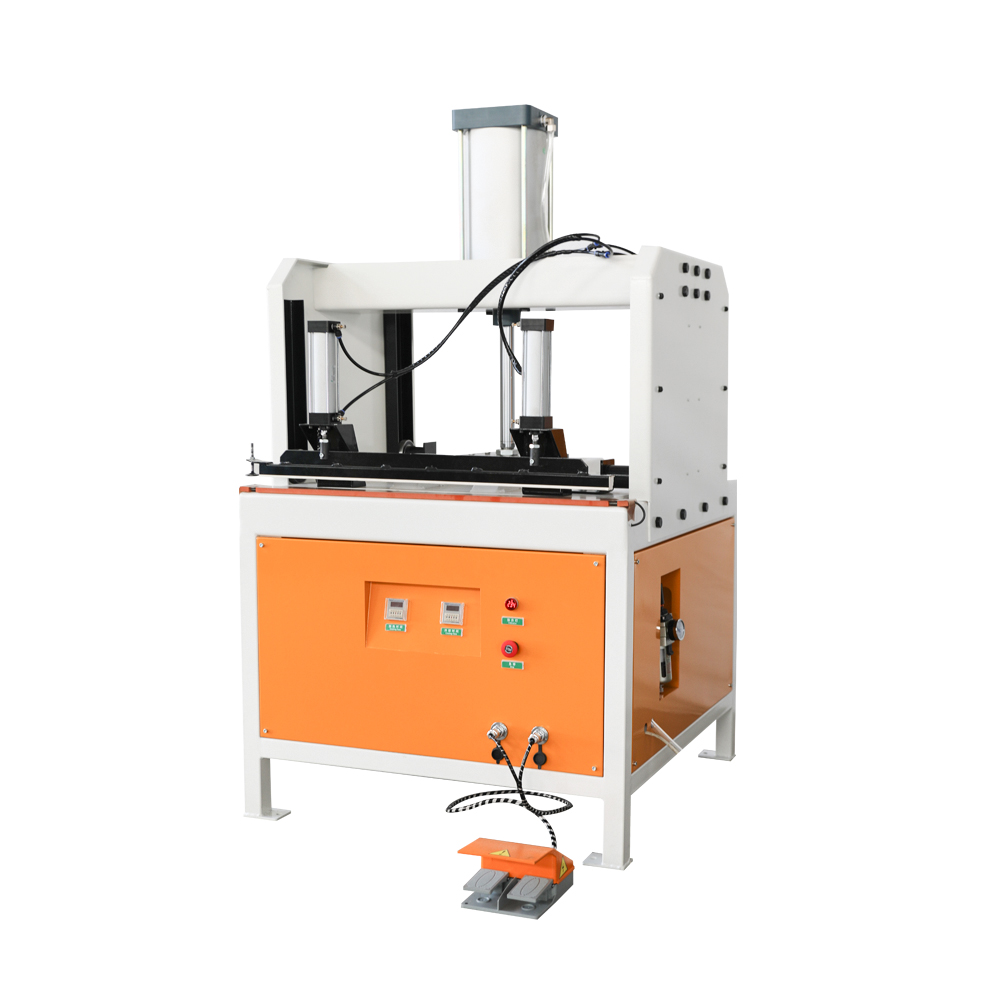
High-Speed, Precision Automation for Continuous Comforter Production
Modern comforter machines integrate advanced automation to sustain continuous, high-volume production without compromising seam integrity. Real-time feedback systems and cycle-optimized mechatronics enable consistent performance across 24-hour shifts—meeting the rigorous throughput and quality demands of large-scale factories.
Real-Time Stitch Accuracy and Feed Control in Automatic Comforter Machines
Precision stitching starts with dynamic feed control. Servo-driven needle bars and adaptive clamp motors adjust fabric advancement within milliseconds, compensating for thickness variations across multi-layer constructions. A 2023 textile automation study found that active feed compensation reduces skipped stitches by up to 30% compared to open-loop systems—directly lowering defect rates. High-resolution optical sensors continuously monitor thread tension and seam formation, triggering instantaneous corrections when deviations occur. This closed-loop methodology ensures uniform stitch length and penetration depth, even during abrupt speed changes or pattern transitions. The result is consistent quilted patterns, stronger panel edges, fewer manual inspections, minimal rework, and steady throughput—especially critical for large-format comforters subjected to repeated laundering.
Cycle Time Benchmarks: How Top-Tier Comforter Machines Achieve >120 Units/Hour
Cycle time optimization relies on synchronized multi-head quilting and integrated folding. Leading manufacturers benchmark performance across three tiers:
| Machine Tier | Typical Cycle Time per Comforter | Output (Units/Hour) | Key Enablers |
|---|---|---|---|
| Standard | 45–60 s | 60–80 | Single-head sewing, semi-automatic feed |
| High-Speed | 30–40 s | 90–110 | Dual-head synchronized stitching, automatic edge alignment |
| Ultra-High-Speed | 22–28 s | 120–160 | Multi-head parallel quilting, smart layer detection, integrated folding |
Ultra-high-speed systems exceed 120 units/hour by overlapping processing stages—for example, completing final border stitching on one unit while initiating panel quilting on the next. Advanced software pre-calculates stitch paths and shares motion profiles across axes, eliminating idle time. Coupled with edge-detection cameras for automatic layer alignment, these machines maintain sub-millimeter accuracy at peak speeds—delivering heavy-duty output from a compact footprint. This enables factories to meet seasonal demand spikes without expanding floor space.
Robust Structural Design and Durability for 24/7 Factory Operation
Reinforced Frame Architecture and Vibration Dampening in Heavy-Duty Comforter Machines
Industrial comforter machines operating around the clock require frames that absorb mechanical stress without flexing. Top-tier models use welded steel monocoque chassis with cross-braced gantry supports—delivering over 40% greater torsional rigidity than bolted alternatives (Industrial Machinery Digest 2022). This design limits deflection to under 0.05 mm during high-speed needle penetration, preserving stitch consistency across shifts. Integrated vibration dampening—via shear-mount isolators and tuned mass dampers—reduces low-frequency oscillations by up to 60%. Lower resonance not only improves shop-floor acoustics but also slows wear on reciprocating components. Factories using such dampened frames reported 28% fewer unscheduled maintenance events over 15,000 operating hours (Textile Engineering Review 2023), ensuring long-term dimensional stability—even with bulky, multi-layer fills.
Heat-Resistant Bearings and Component Lifespan Under Sustained Load
Bearings in high-cycle comforter machines endure constant friction and thermal soak. Standard grease-packed bearings degrade rapidly above 80°C, but ceramic-hybrid races paired with polyurea-thickened lubricants extend safe operation to 150°C. Independent testing confirms these heat-resistant bearings retain 95% of their rated life after 20,000 hours under full load (Bearing Technology Council 2023). Hardened cam followers and ion-nitrided shafts further enhance drive-train resilience against galling and fatigue. Field data from continuous-run installations show a 35% increase in mean-time-between-failure (MTBF) when these components are specified—translating to fewer line stoppages and reliable production of over 1.2 million units before major bearing overhaul. For large factories where unplanned downtime is costly, this durability is non-negotiable.
Smart Material Handling for High-Mix, High-Volume Comforter Manufacturing
Auto-Feeding, Layer Alignment, and Edge Detection Across Multi-Thickness Fabrics
High-mix, high-volume manufacturing requires seamless adaptation across fabric types—from lightweight cotton to heavy down-proof shells. Modern auto-feeding systems use sensor-driven rollers that dynamically adjust pressure based on real-time thickness measurements, preventing jams and ensuring consistent delivery. Layer alignment is equally vital: misalignment of just 1 mm can trigger rejection. Optical sensors detect and correct layer position before stitching begins, while edge-detection technology identifies fabric boundaries—enabling precise cutting and sewing despite batch-to-batch width variation. Together, these features reduce manual intervention, cut material waste by up to 30%, and boost throughput by 20% (industry benchmarks, 2023). The integration delivers rapid style changeovers with minimal recalibration—allowing operators to maintain uniform stitch quality across hundreds of units, day and night.
FAQ
What makes modern comforter machines efficient?
Modern comforter machines are efficient due to advanced automation, real-time feedback systems, and cycle optimization, allowing for continuous, high-volume production with precision stitching and minimal defects.
How do these machines maintain stitch accuracy?
Real-time feed control, servo-driven mechanisms, and optical sensors ensure stitch accuracy by dynamically adjusting fabric movement and thread tension.
What is the output capacity of top-tier comforter machines?
Top-tier machines can achieve output rates exceeding 120 units per hour through multi-head parallel quilting and integrated folding.
How durable are comforter machines for 24/7 operation?
Top-tier machines are built with reinforced frames and heat-resistant components to ensure durability and reliability under continuous operation.
Can these machines handle different fabric types?
Yes, modern auto-feeding systems and edge-detection technology allow machines to adapt to various fabric types and thicknesses seamlessly.