
 EN
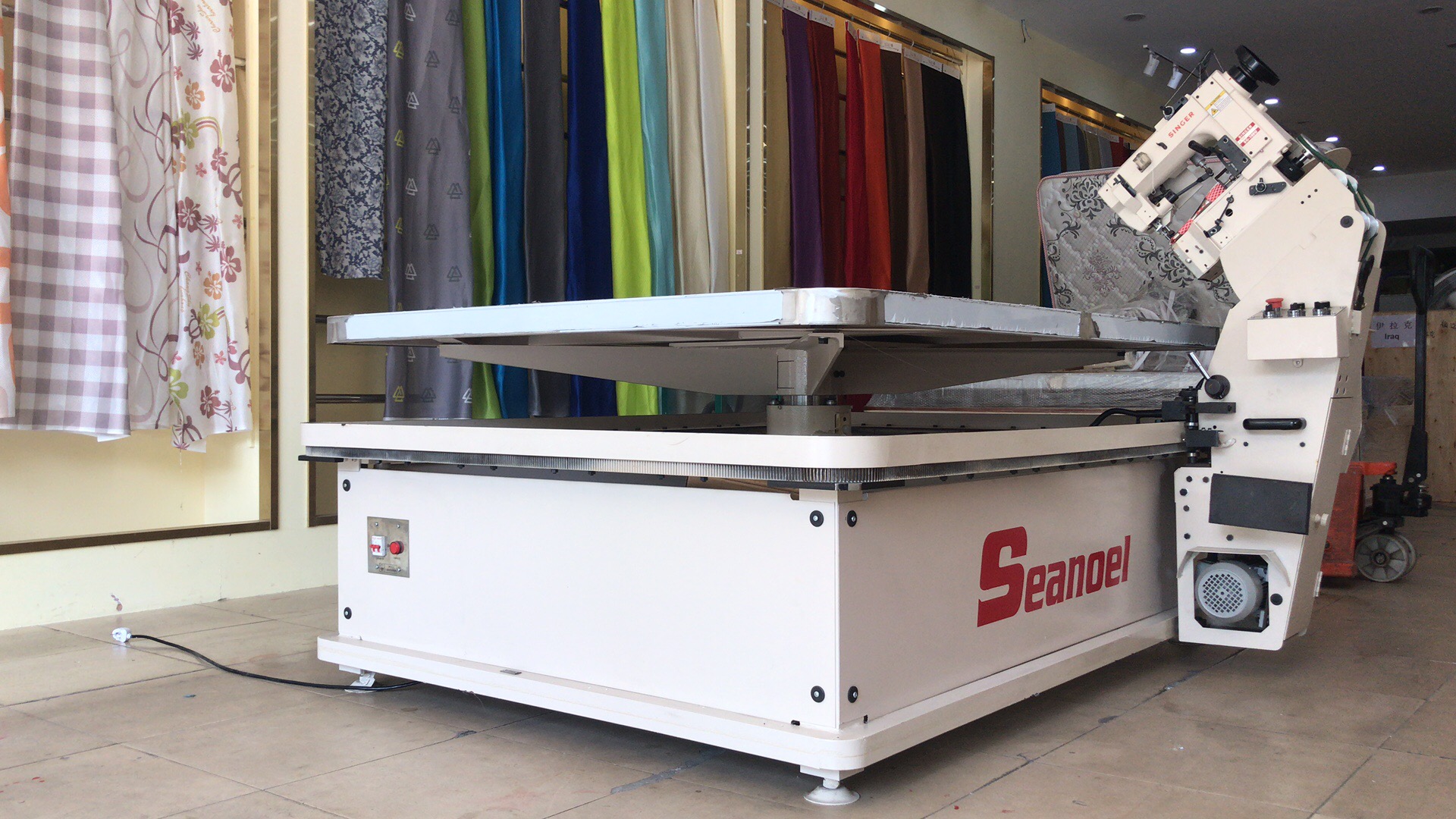
Match Production Requirements to Polyester Wadding Machine Capacity
Forecasting Output Needs: Aligning kg/h Throughput with Order Volume and Shift Schedules
Accurate output forecasting starts with a detailed analysis of confirmed and projected order volumes across all product lines. Rather than relying on nominal kg/h ratings, mills must factor in realistic utilization rates—typically 85%—to account for changeovers, cleaning, and minor downtime. A machine rated at 120 kg/h may only deliver 102 kg/h of saleable wadding under real-world conditions. Multiply that by the number of shifts per day and working days per year to assess whether capacity meets peak demand without creating bottlenecks. Manufacturers who model throughput against shift schedules—not just annual averages—cut idle time by 22% and reduced order lead-time variability by 18%, according to a 2023 operational benchmarking report. For a factory running two 8-hour shifts, the machine must handle the daily peak requirement plus a 10–15% buffer for seasonal surges. This prevents costly under-investment (overtime, missed deliveries) and overspending on oversized equipment that rarely operates at full utilisation.
Polyester-Specific Material Behavior: Thermal Stability, Fiber Length, and Bulk Density Considerations
Polyester staple fibers exhibit distinct physical traits that directly impact wadding quality and machine settings. Thermal stability is critical: standard polyester begins softening near 230 °C, and sustained exposure above 200 °C risks shrinkage and strength loss. A 10 °C overshoot in the bonding zone can reduce fiber tenacity by up to 30%, resulting in thinner, weaker wadding—a finding documented in the 2024 Textile Processing Reference. Fiber length variations (25–50 mm) require adjustable carding and cross-lapping speeds: shorter fibers pack more densely and yield stiffer webs, while longer fibers need wider carding gaps to avoid uneven drafting. Bulk density also varies significantly—up to 15% between recycled and virgin polyester lots—altering compression ratios in the filling chamber. A 2022 study on synthetic wadding uniformity found that a 5% uncorrected bulk density deviation caused 10% weight inconsistency in final panels. Therefore, selecting a machine with precise temperature regulation, variable carding geometry, and density-adaptive dosing is essential for dimensional stability and consistent fill weight.
Verify Technical Performance for Consistent Polyester Wadding Quality
Filling Accuracy and Range: Balancing 0.1g Precision with 1–130g Operational Flexibility
Modern polyester wadding machines achieve filling accuracy within ±0.1 g across an operational range of 1–130 g—enabling seamless transitions between ultra-light insulation layers and dense structural panels without recalibration. This flexibility eliminates the need for dedicated low- and high-density lines, reducing floor space and capital outlay. Real-time gravimetric controls continuously monitor fiber feed, compensating for fluctuations in opening efficiency and recycled-polyester bulk density to prevent over-fill or underweight defects. Leading systems integrate multi-point calibration routines during each shift, ensuring repeatability even with challenging blends. The result is consistent fill weight—vital for thermal performance, comfort, and downstream processing—while expanding the product range a single line can support. By balancing micron-level precision with broad operational adaptability, the filling station becomes foundational to quality-driven production.
Carding and Cross-Lapping Uniformity: Ensuring Even Web Formation for Dimensional Stability
Carding and cross-lapping govern fiber orientation and weight distribution—key determinants of thickness consistency and dimensional stability. A well-engineered carding section with optimized roller settings ensures thorough fiber opening, while the cross-lapper builds uniformity through calculated layering angles. Inconsistent lapping creates thin spots that cause sagging or bunching in finished goods. Advanced machines use servo-driven lappers and automatic tension controls to maintain web thickness variation within ±2%, even at high speeds. Such uniformity improves thermal-bonding efficiency, delivering consistent loft and resilience across the entire panel. Stable dimensions are non-negotiable for precision cutting and quilting; distortion leads directly to material waste and product returns. Verifying repeatable web profiles across multiple batches provides tangible evidence of long-term reliability and overall quality assurance.
Assess Automation Tier and Smart Integration for Long-Term ROI
Labor Efficiency vs. Upfront Cost: Fully Automatic vs. Semi-Automatic Polyester Wadding Machine Trade-Offs
Fully automatic polyester wadding machines integrate feeding, carding, cross-lapping, and stacking into a continuous line requiring minimal operator intervention. Though initial investment is typically 40–60% higher than semi-automatic alternatives, automation reduces per-kilogram labor costs and enables reliable 24/7 operation. Semi-automatic systems offer lower entry cost and batch flexibility but demand 2–3 additional operators per shift for manual feeding and monitoring. When evaluating ROI, consider total cost of ownership—including energy use, spare parts, and rework from handling errors. A fully automatic line often achieves payback within 3–5 years through labor savings alone, making it optimal for high-volume textile manufacturers prioritizing throughput and consistency over short-term capital constraints.
AI-Driven Quality Assurance: Real-Time Defect Detection and Adaptive Calibration for Polyester Fibers
Leading polyester wadding machines now embed vision systems and machine learning algorithms capable of inspecting web formation at full line speed. These AI modules detect neps, thickness deviations, and fiber clumping—and automatically adjust carding speed, air pressure, or cross-lapper angle in response. The result is a closed-loop process where parameters self-calibrate across different polyester fiber lots, holding fill power and weight consistency within ±1.5%. Early defect detection cuts material waste by up to 30% and dramatically reduces reliance on off-line manual inspection—transforming quality control from a cost center into a strategic ROI accelerator.
Confirm rPET Compatibility and Sustainable Operation Readiness
The global shift toward circularity is no longer aspirational—it’s a core procurement requirement. True “sustainable operation readiness” for a polyester wadding machine hinges on its mechanical and digital compatibility with mechanically recycled polyester (rPET) staple fiber. Conventional machines designed solely for virgin resin often fail with rPET due to its lower intrinsic viscosity, broader fiber length distribution, and higher surface friction. Without sufficient torque reserve and precise thermal controls, such systems generate excessive fiber breakage (“fly waste”) and inconsistent web density. According to 2024 industry process benchmarks, retrofitting a standard line for high-percentage rPET blends—without upgrading carding zones—can reduce throughput by up to 19% and increase energy intensity per kilogram.
Sustainable readiness extends beyond mechanical durability to digital traceability. For brands enforcing substantiated green claims—especially under the EU’s emerging Digital Product Passport (DPP) mandates—the wadding line must function as a verified data node. Leading configurations integrate mass flow sensors and energy meters that log specific electricity consumption (kWh/kg) in real time. Critically, the absence of in-situ quality verification often forces operators to apply a “safety margin” of over-stuffing to pass grammage tests—eroding the material cost advantage of rPET. Investing in a system with closed-loop control transforms rPET compatibility from a binary feature check into a verified, economically viable production reality.
FAQ
What factors should be considered for machine capacity planning?
Capacity planning must account for realistic utilization rates (typically 85%), shift schedules, and peak seasonal demands. This ensures machines meet output requirements while avoiding under-investment or overspending.
How do polyester material traits affect machine settings?
Polyester's thermal stability, fiber length variations, and bulk density influence machine settings such as temperature regulation, carding geometry, and density-adaptive dosing.
What advantages do fully automatic polyester wadding machines offer?
Fully automatic machines reduce labor costs, enable seamless 24/7 operation, and provide faster ROI compared to semi-automatic systems, making them ideal for high-volume production.
How do AI-driven quality assurance systems improve wadding production?
AI systems detect defects in real time and automatically adjust machine settings, ensuring consistent fiber distribution and reducing material waste by up to 30%.
Why is rPET compatibility critical for sustainable operations?
rPET compatibility ensures machines can process mechanically recycled fibers efficiently, reducing fly waste, maintaining web density, and supporting compliance with sustainability mandates like the EU’s Digital Product Passport (DPP).
Table of Contents
- Match Production Requirements to Polyester Wadding Machine Capacity
- Verify Technical Performance for Consistent Polyester Wadding Quality
- Assess Automation Tier and Smart Integration for Long-Term ROI
- Confirm rPET Compatibility and Sustainable Operation Readiness
-
FAQ
- What factors should be considered for machine capacity planning?
- How do polyester material traits affect machine settings?
- What advantages do fully automatic polyester wadding machines offer?
- How do AI-driven quality assurance systems improve wadding production?
- Why is rPET compatibility critical for sustainable operations?