
 EN
EN
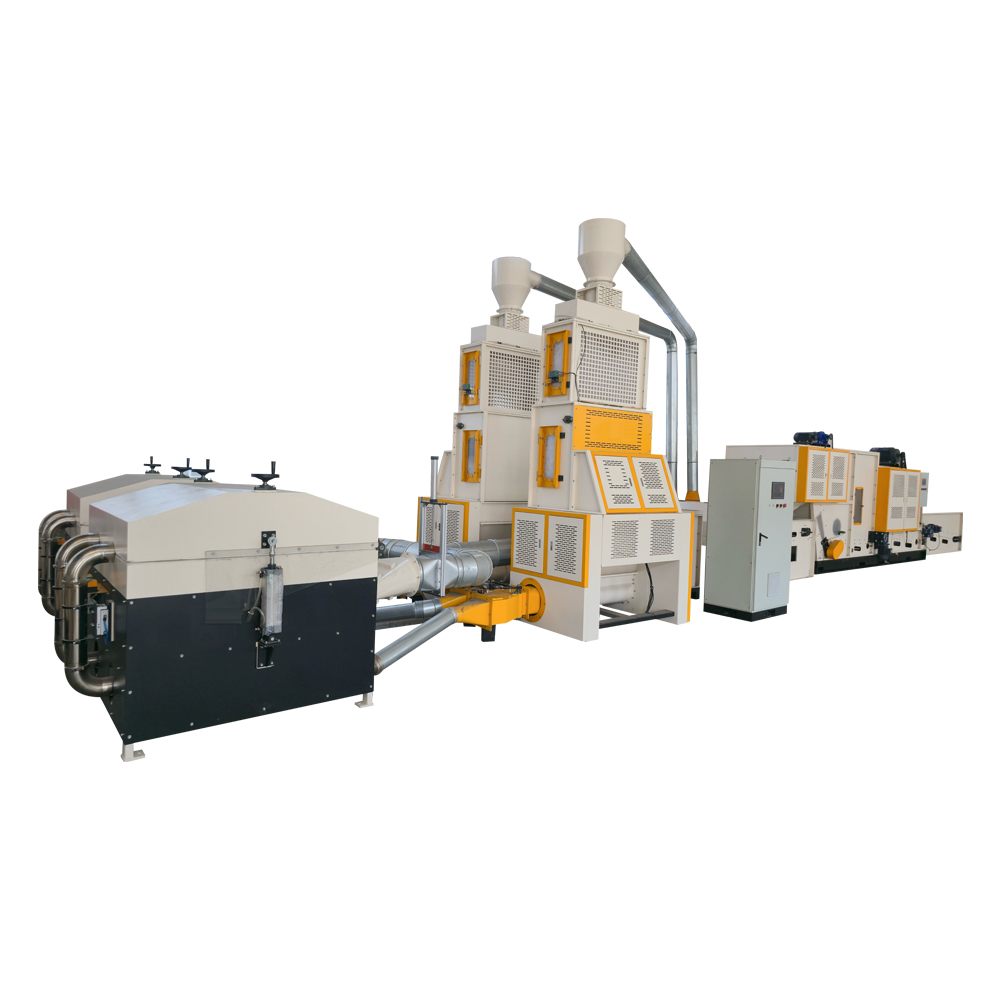
Why Modern Pillow Machines Combine Filling and Vacuum Packing
Seamless End-to-End Workflow: From Fluff to Sealed Pillow in One System
A modern pillow machine integrates filling and vacuum packing into one continuous, automated sequence. Raw materials—whether polyester fibers, shredded memory foam, or microbeads—enter the hopper, and the system precisely doses fill into the pillow shell. Sensors monitor density and weight in real time, adjusting feed rates to maintain consistency. Immediately after filling, the pillow transits directly into the vacuum chamber without manual handling. The machine compresses the pillow to a preset ratio, removes air, and heat-seals the final package. This uninterrupted flow eliminates transfer delays and reduces contamination or product damage risks. By managing the entire process in a single unit, manufacturers achieve output speeds of up to 15 pillows per minute—a nearly 50% improvement over fragmented lines (Packaging Automation Trends, 2023). The integrated design also simplifies operator training, as one control interface governs all functions.
Operational and Cost Advantages Over Discrete Filling + Packing Lines
Separate filling and packing stations demand extra floor space, multiple conveyors, and labor for material transfers. A combined pillow machine consolidates these functions, cutting equipment footprint by ~35% and eliminating buffer storage between steps. Vacuum compression alone shrinks pillow volume by up to 70%, yielding major savings in warehouse space and freight costs—shipping a standard container of compressed pillows can cost 40% less than uncompressed units (Global Logistics Review, 2023). Fewer manual touchpoints reduce error rates: misaligned seals and inconsistent fill weights drop by an average of 25% with integration. Maintenance is streamlined—there’s one set of wear parts, and spare parts inventory can be centralized. The result is lower total cost of ownership, faster ROI, and scalable production without proportional labor increases.
Precision Pillow Filling: Material Flexibility and Weight Accuracy
Handling Diverse Fill Materials: Fibers, Memory Foam, and Microbeads
Modern pillow machines adapt seamlessly to polyester fibers, shredded memory foam, and microbeads—without sacrificing speed or consistency. Interchangeable hoppers, adjustable airflow, and programmable fill settings accommodate vastly different densities and flow behaviors. For light, fluffy fibers, controlled air fluffing prevents clumping and ensures even loft. For dense memory foam, low-speed augers or gravity-fed channels deliver uniform chunks without crushing. For granular microbeads, precision valves meter exact volumes and stop instantly to prevent overfill. This flexibility eliminates the need for dedicated lines, enabling rapid changeovers between pillow types. Crucially, it preserves intended feel and firmness—whether soft fiber or high-loft memory foam—supporting brand integrity across product lines.
±1.5g Weight Consistency: Sensor-Driven Control for Brand-Quality Pillows
Achieving ±1.5g weight accuracy across thousands of units is essential for brand reputation and cost control. Dynamic load cells continuously monitor fill weight in real time; when deviation from target is detected, the system adjusts auger speed or fill rate within milliseconds—cutting off material flow before over- or under-filling occurs. Regular calibration against traceable test weights, plus environmental compensation for temperature and vibration, sustains this precision across long runs. The outcome is consistent product performance, fewer customer returns, and minimized material waste—transforming filling from a variable step into a reliable, repeatable process that protects margins and brand image.
Vacuum Packing for Pillows: Efficiency, Protection, and Seal Reliability
Balancing Compression Ratio and Shelf-Life Extension in Pillow Packaging
Vacuum packing compresses pillows by up to 70% of their original volume—slashing storage footprints and freight expenses. But optimal compression requires balance: excessive force can permanently deform memory foam or fracture microbead structures, while insufficient compression fails to deliver meaningful space savings. An airtight seal then locks out moisture, dust, and oxygen—the primary drivers of fiber degradation and odor absorption. Hermetic packaging extends shelf life by 30–50%, ensuring pillows arrive fresh and plump, ready to expand upon opening. This synergy between intelligent compression and robust barrier protection strengthens brand consistency and reduces post-purchase dissatisfaction.
Ensuring Leak-Proof Seals: Thermal Calibration and Vacuum Integrity Testing
Leak-proof seals are non-negotiable for maintaining vacuum integrity. Precise thermal calibration of sealing bars matches film melting points exactly—creating uniform bonds without burning or weakening the seal. Even a 2°C deviation can cause micro-leaks that compromise vacuum retention over time. Automated systems incorporate real-time vacuum integrity testing—such as pressure decay analysis—to detect faulty seals before the pillow leaves the line. One leading manufacturer’s inline inspection protocol catches 99.7% of seal defects, preventing costly repackaging and preserving the compressed state until consumer unpacking.
Integration with Automated Packaging: VFFS and Conveyor Synchronization
The final frontier of a modern pillow machine is seamless integration with downstream packaging—particularly Vertical Form-Fill-Seal (VFFS) systems and smart conveyor networks. This isn’t just about moving product; it’s about high-speed, data-driven orchestration. The pillow machine’s control system communicates directly with the VFFS bagger, triggering the bag-making cycle in precise response to the filler’s discharge signal—eliminating lag that causes misalignment or damage. When synchronized, a single automated cell compresses a pillow and transfers it into an open VFFS bag, replacing error-prone manual hand-offs with a continuous, disruption-free flow. Throughput increases by as much as 40% compared to decoupled processes.
Intelligence resides in the conveyor logic. Distributed PLC controls and sensor arrays dynamically manage product flow—automatically adjusting belt speeds to prevent accumulation at the VFFS infeed. This is especially critical for rigid vacuum-packed pillows, which require precise orientation and timing. The conveyor acts as both buffer and regulator, delivering one correctly positioned pillow to the VFFS at the exact moment it’s ready to form, fill, and seal. Standardized communication protocols enable coordinated operations—like pausing the VFFS during a film splice on the pillow machine—without operator intervention. This level of automation replaces human coordination with deterministic control, reducing direct labor costs by up to 82% in documented implementations (2023 case study data). It’s a lean, predictable, and highly productive pathway forward.
FAQ
Why integrate filling and vacuum packing in one machine?
Integrating these functions into a single machine streamlines production workflows, reduces contamination risks, saves space, and improves efficiency by eliminating delays from manual handling.
What materials can modern pillow machines handle?
Modern pillow machines are designed to process polyester fibers, shredded memory foam, and microbeads, offering flexibility for different pillow types.
How does vacuum packing help reduce costs?
Vacuum packing compresses pillow volumes by up to 70%, reducing storage and shipping expenses significantly while extending product shelf life.
What is the importance of weight accuracy in pillow filling?
Consistent weight accuracy ensures brand integrity, reduces material waste, and minimizes returns by delivering reliable product quality.
How does automation enhance pillow machine performance?
Automated systems improve synchronization with packaging machinery, increase throughput, reduce labor costs, and ensure consistent product alignment and packaging.