
 EN
EN
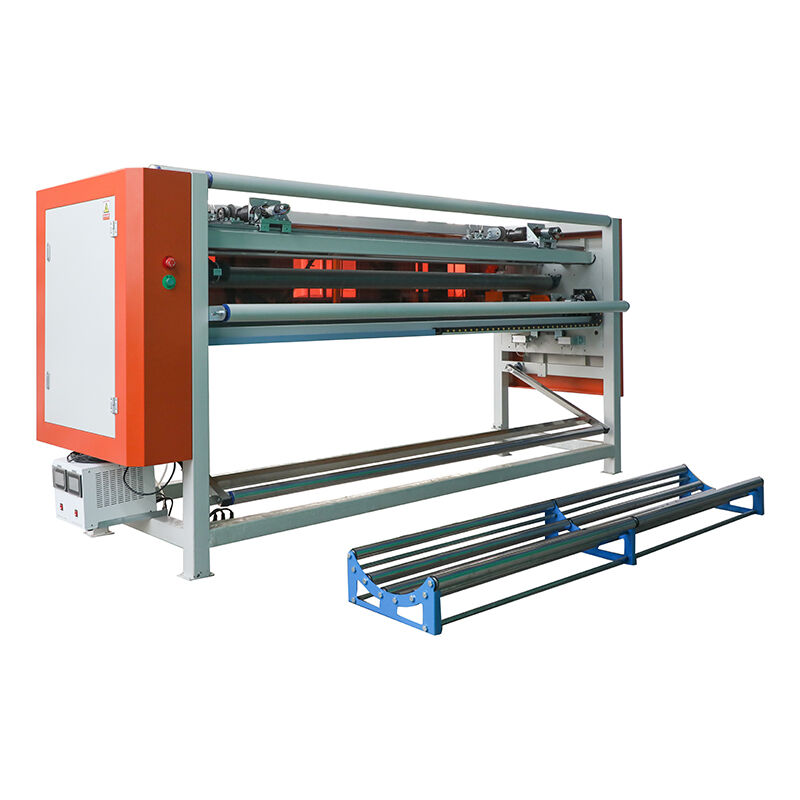
How Fabric Composition Determines Ultrasonic Machine Effectiveness
Why Thermoplastic Fibers (e.g., Polyester, Nylon) Enable Clean Cutting and Sealing
Ultrasonic machine effectiveness hinges on a fabric’s ability to melt under rapid vibration. Thermoplastic fibers—including polyester, nylon, polypropylene, and acrylic—contain polymer chains that soften and fuse when exposed to localized heat. During cutting, high-frequency oscillation (20–40 kHz) generates friction precisely at the blade–fabric interface, raising temperature just enough to melt fiber ends in milliseconds. The molten material re-solidifies instantly as the sonotrode moves away, forming a smooth, sealed edge that resists unraveling—even on delicate nonwovens. Blends with ≥50% thermoplastic content perform reliably: the synthetic component melts and encapsulates natural fibers, locking them mechanically within the fused matrix. This makes thermoplastic-dominant fabrics ideal for high-speed, single-pass processing without post-cut finishing.
The Limitations with Natural and Regenerated Fibers: Cotton, Wool, and Viscose Require Hybrid Approaches
Pure natural fibers—cotton, wool, silk—and regenerated cellulosics like viscose lack thermoplastic properties; they do not melt but instead char, scorch, or disintegrate under ultrasonic energy. As a result, standard ultrasonic cutters cannot produce sealed edges on 100% cotton or wool—only rough, singed cuts with no fray resistance. To process these materials, manufacturers adopt hybrid strategies: integrating thermoplastic binders into the fabric structure, applying meltable edge tapes, or combining ultrasonic cutting with auxiliary sealing methods such as laser or hot-knife stations. In polyester–viscose blends, for example, the polyester melts to form a cohesive seal while the viscose remains structurally intact—trapped within the fused polymer network. These approaches preserve the hand-feel, drape, and aesthetic of natural fibers while still leveraging the speed, precision, and automation benefits of ultrasonic technology.
Ultrasonic Machine Edge Sealing: Eliminating Fraying Without Post-Processing
The Cut-and-Seal Mechanism: How Localized Heat Melts Fiber Ends in Real Time
Ultrasonic machines achieve simultaneous cutting and sealing by converting high-frequency electrical energy into mechanical vibration via a titanium sonotrode. Oscillating at 20–40 kHz, the blade creates targeted frictional heat only at the cut line—melting thermoplastic fibers in real time. As the tool advances, the molten polymer re-solidifies immediately, forming a clean, bonded edge. This cauterization eliminates fraying without adhesives, threads, or secondary operations. Unlike laser cutting—which often discolors or stiffens edges—the ultrasonic process preserves fabric flexibility, stretch recovery, and surface integrity, making it especially valuable for performance knits and activewear. Industry data indicates that conventional finishing steps (e.g., overlocking, heat-sealing, or binding) account for roughly 22% of total production time; ultrasonic integration removes this bottleneck entirely, delivering sterile, lint-free edges ready for assembly.
Industry Impact: Fray-Free Edges Driving Adoption in Activewear and Medical Non-Wovens
Fray-free edge quality has positioned ultrasonic technology as the preferred solution in sectors where dimensional stability and contamination control are critical. In activewear manufacturing, sealed edges withstand repeated stretching, laundering, and abrasion—extending garment life and maintaining visual polish. Medical non-woven producers rely on ultrasonic sealing to create sterile, particulate-free edges for surgical gowns, drapes, and wound dressings—where loose fibers pose unacceptable contamination risks. Beyond quality, the process reduces labor, eliminates separate finishing stations, and lowers material waste from trimmed frayed margins. Manufacturers report measurable gains in throughput and cost efficiency, reinforcing adoption across high-value, low-tolerance applications as global demand grows for sustainable, high-speed textile processing.
Optimizing Ultrasonic Machine Parameters for Your Fabric
Key Variables: Amplitude, Pressure, Blade Angle, and Feed Speed — and Their Interdependence
Four interdependent parameters govern cut quality and seal integrity:
- Amplitude controls vibrational energy input; higher amplitude increases localized heat, essential for dense or multilayered fabrics.
- Pressure determines contact force between sonotrode and fabric—too low causes incomplete severance; too high risks deformation or scorching.
- Blade angle affects how vibrational energy concentrates at the cutting edge; steeper angles reduce required force but may increase fraying risk on lightweight textiles.
- Feed speed sets dwell time—faster speeds shorten exposure, demanding compensatory adjustments in amplitude or pressure to maintain seal continuity.
Because these variables interact dynamically, tuning requires holistic calibration: increasing feed speed typically necessitates proportional amplitude uplift, while excessive pressure at low speeds can cause thermal damage. Consistent, fray-free output demands synchronized optimization—not isolated parameter tweaks.
Calibration Framework for Blends (e.g., Polyester/Viscose): Balancing Seal Integrity and Surface Quality
Polyester–viscose blends exemplify the calibration challenge: polyester melts readily to form strong seals, but viscose degrades under excess heat. A pragmatic starting point uses moderate amplitude (60–70% of maximum), low pressure, and conservative feed speed. If edge sealing is weak, incrementally increase feed speed first—this extends effective dwell time without raising peak temperature. If surface scorching or discoloration appears, reduce amplitude before lowering pressure. Test cuts on production-grade scrap; assess seal integrity by gently dragging a fingernail along the edge—if fibers lift or pull loose, sealing is incomplete. Slight upward adjustment of blade angle (e.g., from 10° to 15°) helps direct vibrational energy deeper into the polyester-rich zones. Document the final parameter set for repeatability—critical for maintaining consistency across production runs.
Ultrasonic Machine vs. Traditional Cutting Methods: A Practical Comparison
When evaluating ultrasonic cutting against conventional techniques, the distinction lies in fundamental physics: ultrasonic systems cut and seal through controlled, localized thermal fusion, whereas die cutting relies solely on mechanical shear. That difference drives measurable advantages in precision, sustainability, and operational efficiency. Facilities transitioning to ultrasonic technology report fabric waste reductions from 12–18% down to 3–5%, power consumption drops from 2.5–3.5 kWh to just 0.8–1.2 kWh per operation, and VOC emissions fall to zero—versus 220–400 ppm with solvent-based or heated blade systems. The table below summarizes key comparative metrics:
| Parameter | Ultrasonic Cutting | Traditional Die Cutting |
|---|---|---|
| Power Consumption | 0.8–1.2 kWh | 2.5–3.5 kWh |
| Waste Generation | 3–5% | 12–18% |
| VOC Emissions | None | 220–400 ppm |
These outcomes reflect more than incremental improvement—they signal a shift toward cleaner, leaner, and more responsive textile manufacturing—particularly advantageous for synthetic blends, technical non-wovens, and applications demanding certified edge integrity.
FAQ
What types of fabrics work best with ultrasonic machines?
Thermoplastic fibers such as polyester, nylon, polypropylene, and acrylic are ideal as they melt and fuse under ultrasonic heat to create sealed, fray-resistant edges. Blends with at least 50% thermoplastic content also perform well.
Can ultrasonic machines process natural fibers like cotton or wool?
Pure natural fibers do not melt under ultrasonic energy. Hybrid strategies, such as adding thermoplastic binders or combining ultrasonic cutting with auxiliary methods, are needed to process these materials.
How does ultrasonic cutting compare to traditional cutting methods?
Ultrasonic cutting simultaneously cuts and seals fabric edges through localized thermal fusion, reducing waste, power consumption, and VOC emissions compared to traditional die cutting or heated blade systems.
What parameters are critical for optimizing ultrasonic cutting?
Key parameters include amplitude, pressure, blade angle, and feed speed. These need to be calibrated holistically to ensure clean cuts and strong seals without damaging the fabric.