
 EN
EN
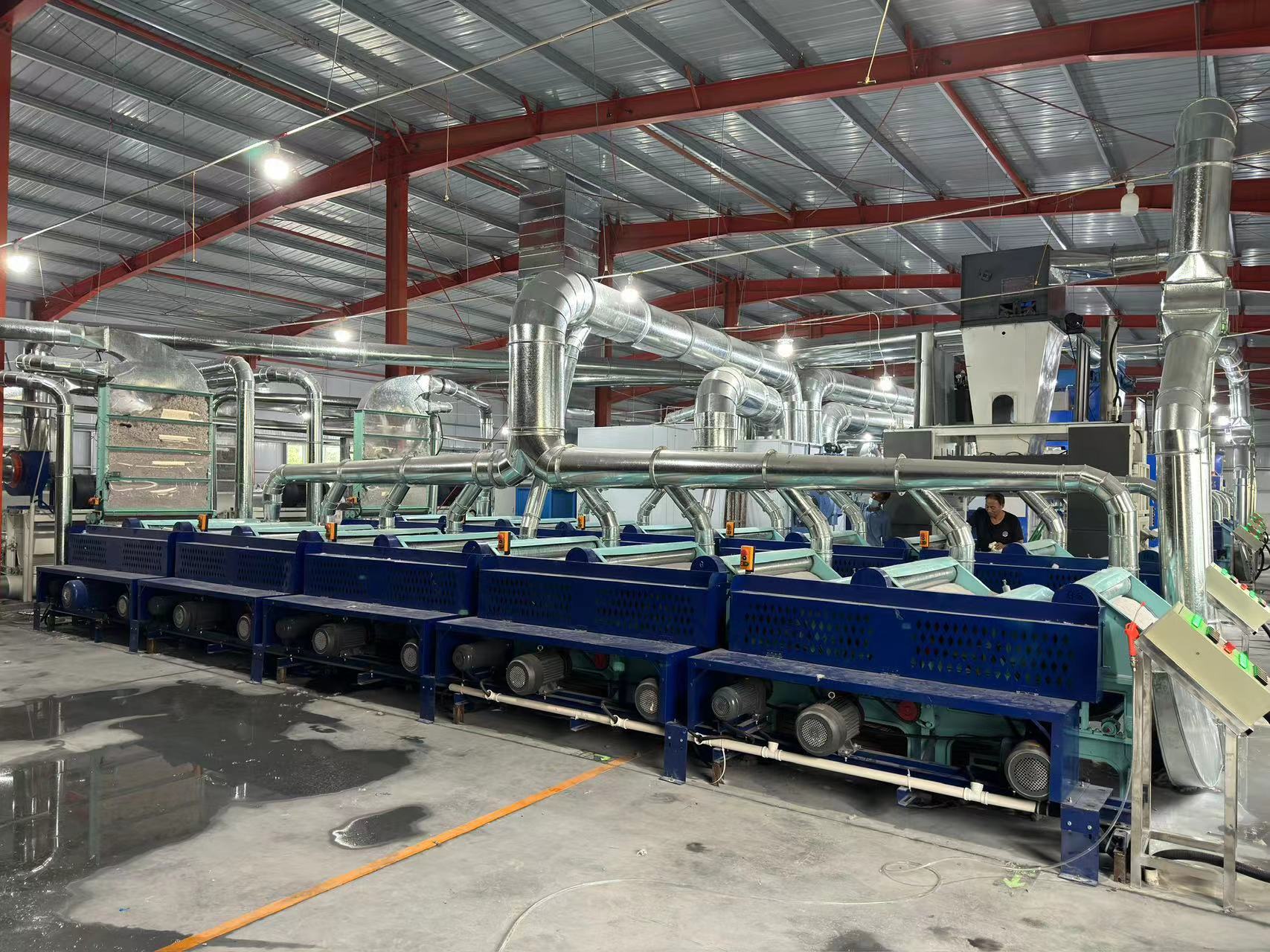
The Role of the Professional Comforter Machine in High-Speed Quilt Production
Key Performance Specifications That Enable 500+ Daily Quilts
Achieving 500+ quilts per day hinges on a comforter machine engineered for speed, precision, and robust material handling. Modern professional systems use high-torque servo motors to sustain stitch rates above 2,000 stitches per minute—without sacrificing consistency. A working width of 2.4 meters or more accommodates full-size comforter panels in a single pass, while multi-needle configurations (typically 10–20 needles) quilt parallel rows simultaneously, cutting cycle time by up to 75%. Roll-to-roll feeding, synchronized tension control, and computerized pattern memory eliminate manual setup and alignment delays. These machines reliably process thick assemblies up to 80 mm loft—critical for premium down-alternative and wool-filled comforters—without needle deflection or jamming. A throat space of 30 inches or greater ensures smooth fabric movement, minimizing drag and vibration-induced stitch distortion. Combined, these features enable continuous operation with one quilt completed every 2–3 minutes—easily surpassing the 500-unit daily benchmark.
Computerized Multi‑Needle Comforter Machines vs. Legacy Single‑Needle Systems
Computerized multi-needle comforter machines represent a fundamental leap over legacy single-needle systems—not just in speed, but in scalability and consistency. Where a single-needle machine traces each design element sequentially, a multi-needle head quilts 10–20 parallel rows in one continuous motion, delivering a 300–500% throughput increase at equivalent stitch speeds. Integrated thread trimmers, auto-tensioning, and programmable pattern recall eliminate stoppages for threading, tension adjustments, or design changes. Crucially, multi-needle systems are purpose-built for high-loft, multi-layer assemblies: reinforced needle plates, high-penetration presser feet, and rigid frames maintain accuracy across dense fills. While single-needle machines remain valuable for prototyping and low-volume custom work, only computerized multi-needle platforms deliver the repeatability, uptime, and throughput required to sustain 500+ quilts/day at commercial scale.
Roll-to-Roll Automation: Integrating the Comforter Machine into End-to-End Quilting Lines
Synchronizing Filling, Layering, and Quilting for Uninterrupted Output
Reaching 500+ quilts daily requires more than a fast machine—it demands seamless integration across the entire quilting line. In a true roll-to-roll configuration, the comforter machine functions as the central node in a synchronized ecosystem: upstream filling rolls unwind automatically; fabric shells are layered with micron-level registration; and the resulting “sandwich” feeds directly into the quilting zone at precisely matched speed. Central PLC-based control continuously adjusts roller velocities based on real-time feedback from optical sensors and load cells—ensuring consistent tension and alignment across all layers. Idle time drops to under 3% of total runtime, and with layering cycles completing every 4.5 seconds, the multi-needle head operates in near-continuous motion. This end-to-end synchronization transforms discrete operations into a unified production flow—where one quilt exits as the next enters—maximizing asset utilization and throughput stability.
Real-Time Adaptive Control of Stitch Parameters Across High-Volume Runs
Sustaining quality at scale demands dynamic responsiveness—not static settings. Advanced comforter machines embed vision sensors and laser thickness gauges that scan incoming layered material at line speed, detecting real-time variations in loft, density, seam overlap, or fabric shift. The control system instantly recalibrates stitch length, thread tension, and needle penetration depth—adjusting within milliseconds and without interrupting quilting. This adaptive capability prevents skipped stitches, thread breaks, and puckering when transitioning between fill types (e.g., 300 g/m² polyester to 600 g/m² down-alternative) or shell fabrics mid-run. Integrated data logging supports predictive maintenance—flagging wear trends in needle bars or feed dogs before performance degrades. By eliminating manual recalibration and minimizing variance, adaptive control directly enables the >99% first-pass yield essential for reliable 500-quilt days.
Maintaining Quality and Consistency at Scale: Process Controls for 500+ Quilts/Day
Case Study: Tier-1 Manufacturer Achieves 527 Quilts/Day with 99.3% First-Pass Yield
A leading global bedding manufacturer validated the viability of high-volume, high-quality comforter production by achieving 527 quilts per day with a 99.3% first-pass yield—using a tightly integrated professional comforter machine and closed-loop quality management system. Their approach centered on three interlocking controls: (1) Incoming materials were screened per ASTM D5034 and ISO 9073-3 using automated GSM and fiber-distribution analysis; (2) In-line sensors monitored stitch length, tension, and pattern registration during quilting—with automatic stops triggered for deviations exceeding ±0.25 mm; and (3) Golden samples and hourly operator audits verified seam integrity and dimensional accuracy against shift-specific benchmarks. The comforter machine’s adaptive feed control maintained layer synchronization throughout the run, eliminating puckering even at peak throughput. Compared to the industry average of 95% first-pass yield reported in the 2023 Textile Quality Management Survey, this result reduced rework by 80%, saved 112 labor hours weekly, and cut material waste by 22% through precise edge trimming and stitch placement. The case confirms that 500+ quilts/day is not merely about speed—it’s the outcome of a disciplined, data-driven quality ecosystem where every stitch is measured, managed, and verified.
FAQ Section
What key features should a professional comforter machine have to produce 500+ quilts daily?
A professional comforter machine should include high-torque servo motors for stitch rates above 2,000 stitches per minute, multi-needle configurations, roll-to-roll feeding, computerized pattern memory, and advanced material handling features that allow processing of thick assemblies.
How do computerized multi-needle machines compare to single-needle systems?
Computerized multi-needle machines offer a 300–500% throughput increase at similar stitch speeds, thanks to their ability to quilt 10–20 rows simultaneously. They also feature integrated thread trimmers, auto-tensioning, and other automation that reduces stoppages and boosts consistency.
What is roll-to-roll automation in quilting?
Roll-to-roll automation ensures seamless integration of all steps in the quilting process, including filling, layering, and quilting. It reduces idle time and ensures synchronized production for uninterrupted output.
How does adaptive control maintain quality during high-volume production?
Adaptive control uses sensors to monitor materials in real-time, adjusting parameters like stitch length, thread tension, and needle penetration to match material variations, ensuring high-quality results with a >99% first-pass yield.
Table of Contents
-
The Role of the Professional Comforter Machine in High-Speed Quilt Production
- Key Performance Specifications That Enable 500+ Daily Quilts
- Computerized Multi‑Needle Comforter Machines vs. Legacy Single‑Needle Systems
- Roll-to-Roll Automation: Integrating the Comforter Machine into End-to-End Quilting Lines
- Maintaining Quality and Consistency at Scale: Process Controls for 500+ Quilts/Day
- FAQ Section