
 EN
EN
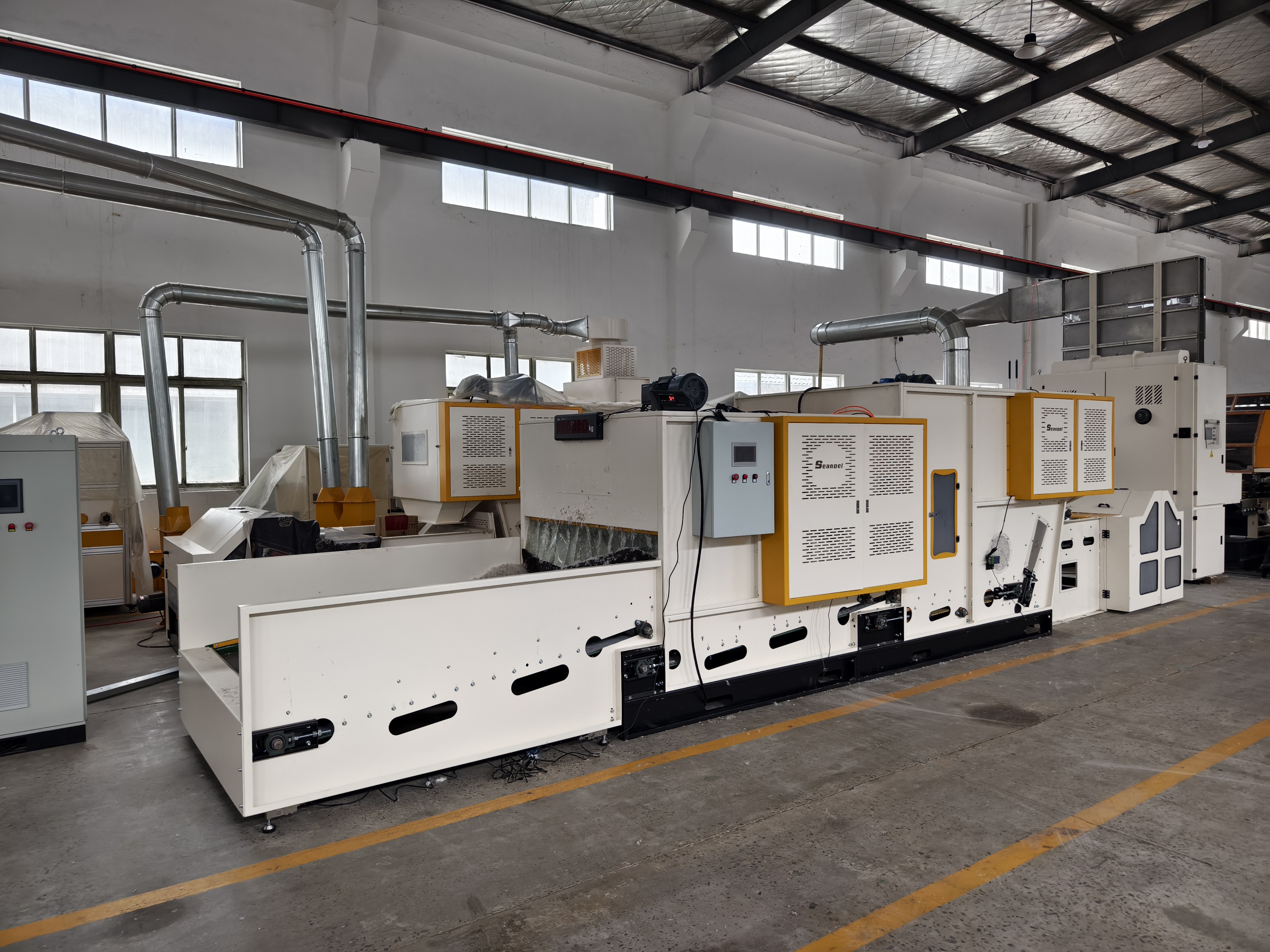
Throat Space and Harp Capacity for Large, Multi-Layer Comforters
Minimum throat space requirements for 100+ inch wide comforters
A quilting machine designed for high-end comforter manufacturing must accommodate the sheer bulk of oversized, multi-layer bedding. For comforters exceeding 100 inches in width, throat space—the horizontal distance from the needle to the machine’s arm—is the critical dimension. When a king-size comforter is folded or rolled onto the frame, throat space determines how much fabric can be positioned before the quilt bundle contacts the machine body. Industry practice shows that machines with less than 30 inches of throat space force constant repositioning, disrupting quilting rhythm and introducing stitch irregularities. In contrast, models offering 30–36 inches allow operators to work on larger sections in a single pass—especially valuable when handling 100-inch-wide panels folded to 50 inches. This space must also accommodate the loft of multiple batting layers and maintain fabric stability under tension. Insufficient throat depth causes drag on the needle plate, resulting in uneven thread tension and skipped stitches. Specifying generous throat space is therefore not optional—it’s a production necessity for consistent, high-quality output.
Harp space vs. usable quilting area: why 20+ inches isn’t always enough
Harp space is often conflated with usable quilting area—but they are not equivalent. A machine rated at 20 inches of harp space may deliver only 12–14 inches of effective quilting width when working with high-loft, multi-layer comforters. This reduction occurs because thick quilts must be clamped onto take-up rails, pushing the top layer closer to the machine arm. A 3-inch cotton/polyester blend, for example, can consume up to 4 inches of harp clearance before the needle even reaches the fabric surface. Additionally, the hopping foot and presser bar assembly project into the harp zone, further limiting usable space. Experienced quilters report that on three- or more-layer stacks, a 20-inch harp often requires advancing the quilt after every 10-inch pattern repeat—doubling handling time compared to a 30-inch machine and increasing misalignment risk. Purchasing decisions should therefore prioritize real-world usable quilting area, not nominal harp specifications.
Frame compatibility and extension table integration for continuous quilting
The quilting machine frame must complement throat capacity to enable smooth, uninterrupted quilting. A robust frame rated for at least 200 pounds prevents flexing that distorts stitch accuracy on heavy comforters. Extension tables are essential for supporting quilt bulk as it feeds into the sewing area—reducing drag that causes needle deflection. Many industrial setups integrate hydraulic or motorized fabric advance systems synchronized with the machine’s stitch regulator, eliminating manual intervention during advancement. This integration is critical for oversized comforters, whose weight can overwhelm hand-cranked frames. The table surface must be slick and snag-free, and its length sufficient to prevent draping onto the floor—which introduces uneven tension. A well-engineered frame with seamless extension table support enables edge-to-edge quilting in a single motion, maximizing throughput while preserving pattern integrity.
Power and Stitch Precision for Dense, Multi-Layer Quilting
Motor torque, RPM stability, and stitches per bite (SPB) on 3–5 layer stacks
Industrial quilting machines handling 3–5 layers demand sustained torque—not just speed—to drive needles through dense composites without deflection. A motor delivering ≥1.5 Nm of torque at low RPM ensures consistent penetration, even in high-loft cotton or polyester blends. RPM stability is equally vital: fluctuations exceeding 5% can degrade stitch quality by up to 15% (Textile Manufacturing Review, 2022). Servo motors in advanced systems maintain speed within ±1% across varying loads, preserving uniform stitch length. Stitches per bite (SPB)—the number of stitches formed per needle penetration cycle—directly affects seam integrity. On 5-layer stacks, a 0.5 mm SPB deviation can cause visible puckering or thread breakage. Top-tier models achieve 2,200 stitches per minute with adaptive torque control that responds to material density, ensuring each stitch locks securely. For operators, the true indicator of robust design is smooth, vibration-free operation and consistent stitch formation—not merely a high wattage rating.
Walking foot and dual-feed systems: stitch consistency on cotton/poly-blend batting composites
Cotton/poly-blend batts present unique feed challenges: their fiber structure can alternately grip and slip unpredictably. A walking foot system—synchronizing top and bottom feed dogs—moves all layers as one unit, eliminating shifting that leads to misaligned seams. Dual-feed quilting machines integrate this mechanism directly into the head, pulling fabric from above while built-in feed dogs advance it from below—a configuration especially effective where polyester fibers lag behind cotton. Independent presser foot pressure adjustment further refines feed control, adapting to variable loft across layers. In practical testing, dual-feed reduced skipped stitches by 40% compared to standard feed on 80/20 cotton/polyester batting. The result is a flat, even quilt top—free of pleats or tension lines—even at high speeds. For high-end comforter manufacturing, this level of stitch consistency directly translates to fewer rejects and a more professional finish, making walking or dual-feed capability non-negotiable.
Industrial Durability and Vibration Control in High-Volume Production
In high-volume comforter manufacturing, structural integrity and vibration suppression directly determine uptime and stitch quality. Continuous operation subjects the machine head and frame to thousands of stress cycles per hour; uncontrolled oscillations accelerate wear on needle bars, hook assemblies, and timing belts. According to a 2023 analysis by the International Textile Machinery Federation, facilities using tuned-mass damping and rigid-frame construction report a 35% reduction in critical component fatigue and a 20% extension in mean time between overhauls. Heavy-duty cast-iron frames—paired with elastomeric isolation mounts at the base and motor—absorb low-frequency vibrations that would otherwise transfer to the quilt path, causing uneven stitch lengths and thread breaks. Dynamic balancing of the main drive shaft and rotary hook mechanisms ensures high-speed stability, particularly when quilting dense multi-layer comforters at speeds exceeding 1,500 stitches per minute. Prioritizing vibration control maintains consistent stitch regulation and avoids costly unscheduled downtime—estimated at over $2,000 per hour in 24/7 production environments (2023 downtime cost survey).
Computerized Quilting Precision: Pantograph Accuracy and Pattern Reliability
Sub-millimeter stitch regulation accuracy in computerized longarm quilting machines
The defining advantage of computerized quilting in high-end manufacturing is sub-millimeter stitch regulation accuracy. Unlike manual tracing—where human variability causes inconsistent stitch lengths—these systems rely on high-resolution encoders and servo motors. Encoders track needle and fabric movement thousands of times per second, feeding real-time data to a processor that instantly adjusts motor speed. This ensures each stitch matches the programmed length within ±0.5 mm, even through complex curves or dense geometric patterns. The result is a flawless, repeatable pantograph design that retains its integrity across the entire comforter surface—from center medallion to outermost border. This precision is essential for luxury goods: a single erratic stitch in a 120-inch-wide comforter can diminish perceived value. By eliminating the subtle speed variations inherent in hand-guided work, computerized systems guarantee the final stitch-out is an exact digital twin of the original design—a non-negotiable standard for elite contract manufacturing.
FAQs
Why is throat space crucial for quilting oversized comforters?
Throat space determines how much fabric can be positioned before it contacts the machine body, allowing for smooth quilting without constant repositioning. Larger throat space enables handling of bigger sections efficiently and reduces stitch irregularities.
What is the difference between harp space and usable quilting area?
Harp space refers to the nominal width of the machine, but usable quilting area is affected by fabric thickness and machine components. High-loft quilts and clamping reduce the effective space drastically.
How does dual-feed improve quilting on cotton/polyester batting composites?
Dual-feed systems synchronize top and bottom feed mechanisms, preventing fabric shifting and ensuring even seam alignment, especially on blends prone to gripping or slipping inconsistently.
Why does vibration control matter for quilting machines?
Vibration affects stitch accuracy and machine durability. Suppressing oscillations prevents wear and enables stable high-speed operation, improving quality and reducing downtime.
What makes computerized quilting superior to manual methods?
Computerized systems achieve sub-millimeter precision, ensuring flawless stitches and repeatable designs across the entire surface, which is difficult to match manually.
Table of Contents
- Throat Space and Harp Capacity for Large, Multi-Layer Comforters
- Power and Stitch Precision for Dense, Multi-Layer Quilting
- Industrial Durability and Vibration Control in High-Volume Production
- Computerized Quilting Precision: Pantograph Accuracy and Pattern Reliability
-
FAQs
- Why is throat space crucial for quilting oversized comforters?
- What is the difference between harp space and usable quilting area?
- How does dual-feed improve quilting on cotton/polyester batting composites?
- Why does vibration control matter for quilting machines?
- What makes computerized quilting superior to manual methods?