
 EN
EN
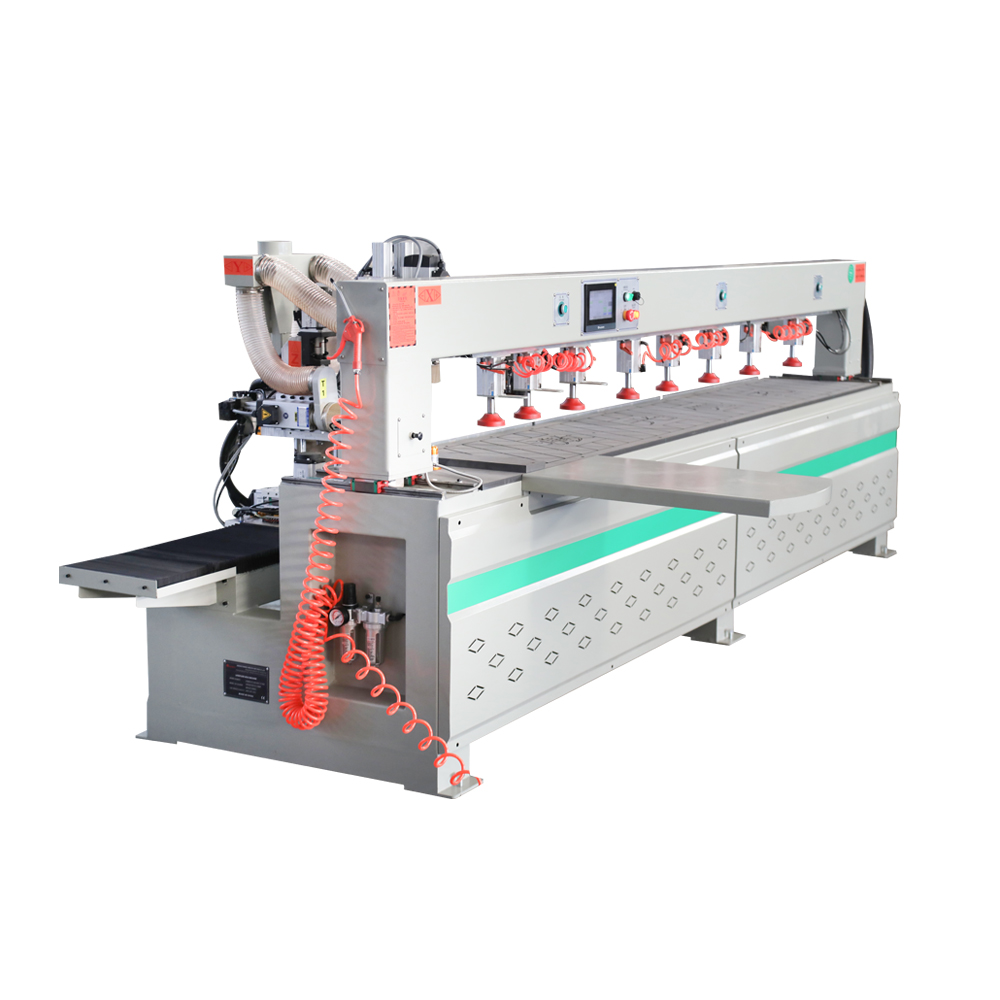
Boosted Production Efficiency with Automatic Polyester Wadding Machines
30–40% Uptime Increase vs. Semi-Automatic Lines
Switching from semi-automatic to fully automatic polyester wadding machine lines delivers a dramatic 30–40% increase in effective uptime, per 2023 industry benchmarks. Unlike semi-automatic systems—prone to frequent stops for manual alignment and calibration—fully automatic lines operate continuously, thanks to integrated sensors and self-correcting mechanisms. Real-time thickness monitoring and automated tension control prevent misalignment-related halts, enabling longer, uninterrupted production runs. This reliability supports tighter delivery schedules, higher throughput, and improved capacity utilization—without requiring additional floor space or capital investment in new lines.
Synchronized Feeding, Carding, and Cross-Lapping Eliminates Manual Bottlenecks
In semi-automatic setups, manual handoffs between feeding, carding, and cross-lapping create recurring bottlenecks and idle time. Fully automatic lines resolve this through centralized real-time coordination: the feeding unit meters fiber precisely, the carding machine ensures uniform alignment, and the cross-lapper deposits consistent layers without pause. This synchronization cuts cycle time by 20%, as confirmed in 2023 production audits, while maintaining stable web density—a critical factor for performance-sensitive applications like insulation and bedding. The result is a truly continuous process capable of 24/7 operation with minimal supervision, significantly lowering labor dependency and boosting output predictability.
Stronger ROI Through Labor and Material Cost Savings
65% Fewer Operators Required Per Shift
Fully automatic polyester wadding machines reduce operator requirements from three to one per shift—a 65% decrease—according to a 2023 production efficiency study. At standard wage rates, this translates to over $45,000 in annual labor savings per machine. Freed personnel can be redeployed to value-added roles such as quality assurance or packaging, increasing overall plant productivity without adding headcount. Converting variable labor costs into predictable operational expenses strengthens ROI and improves financial forecasting accuracy.
18% Reduction in Waste and Rework (ISO 9001 Verified)
Precision automation minimizes material waste by maintaining strict thickness control: ISO 9001–certified facilities report ±0.15 mm accuracy across a full 1,200 mm web width. This eliminates over-thick or thin zones that previously led to scrap or downstream rework—reducing raw material waste and reprocessing by 18%. At approximately $18 saved per ton of fiber processed, these gains accumulate rapidly. Consistent layering also prevents defects like uneven filling in quilts or mattresses, further cutting correction costs and supporting faster, more reliable order fulfillment.
Superior Quality Control and Thickness Precision
±0.15 mm Thickness Accuracy Across 1,200 mm Web Width
Advanced automatic polyester wadding machines achieve ±0.15 mm thickness tolerance across a full 1,200 mm web width using synchronized cross-lapping, closed-loop feedback, and real-time statistical process control (SPC). These systems continuously adjust feed rates and layering pressure to sustain uniform loft and density—directly reducing thin spots, hard zones, and insulation inconsistencies. By removing human variability from critical parameters, they ensure every batch meets stringent specifications without post-production intervention, reinforcing product integrity and scalability for high-performance end uses.
Consistent Output Quality and Defect Reduction
Real-time closed-loop monitoring of web density, fiber distribution, and temperature enables automatic polyester wadding machines to correct deviations within milliseconds—eliminating inconsistencies caused by operator fatigue or manual adjustment errors. Independent analysis in the Textile Engineering Review (2024) confirms that fully automated systems reduce defect rates by up to 22% compared to semi-automatic alternatives. The outcome is consistently compliant output, fewer customer returns, reduced supply chain disruptions, and stronger brand credibility—particularly valuable in regulated or specification-driven markets.
Scalable Production Flexibility for Diverse Market Needs
150–1,200 kg/h Capacity with Seamless Switching Between 50–500 g/m² Weights
Automatic polyester wadding machines offer exceptional scalability: operating across a broad 150–1,200 kg/h throughput range while seamlessly switching between 50–500 g/m² basis weights—all without recalibration. This flexibility supports diverse applications, from lightweight garment linings to heavy-duty filtration media. Synchronized feeding, carding, and cross-lapping maintain web uniformity at any setting, and transitions between orders take under 10 minutes. Manufacturers gain agility to respond to shifting demand, pursue short-cycle opportunities, and avoid capital lock-in from single-purpose equipment—building a resilient, future-ready production model.
FAQ Section
What is the main advantage of switching to automatic polyester wadding machines?
The main advantage is a significant boost in production efficiency, with 30–40% increased uptime, synchronized processes, and reduced labor dependency.
How do automatic machines reduce defect rates?
Automatic machines utilize real-time closed-loop monitoring to correct deviations instantly, reducing defect rates by up to 22% compared to semi-automatic alternatives.
Can automatic machines handle different product specifications?
Yes, they offer scalability with a throughput range of 150–1,200 kg/h and seamless switching between 50–500 g/m² weights without recalibration.
How do automatic machines support cost savings?
They reduce labor needs by 65%, cut material waste by 18%, and improve ROI through predictable operational expenses and minimized waste.