
 EN
EN
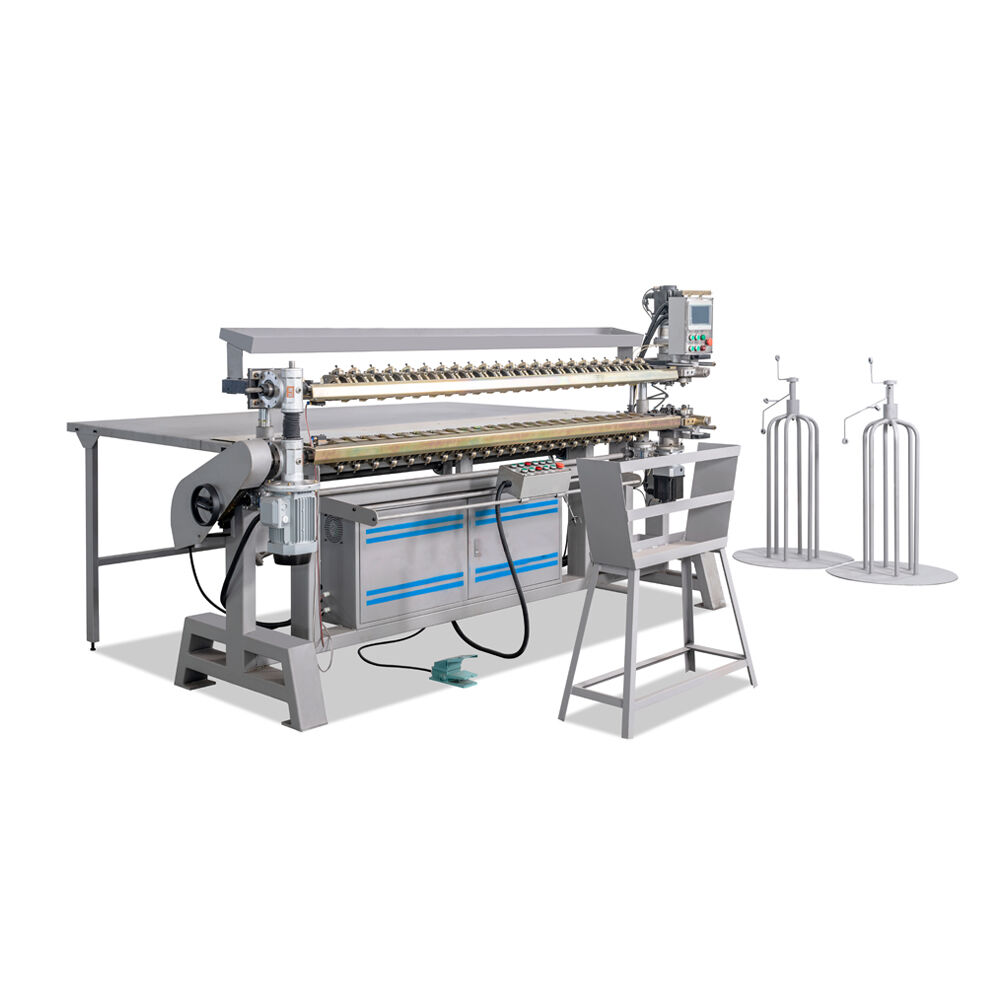
How Thermal Bonding Polyester Wadding Machines Work
Heat-Activated Fiber Fusion: Process Mechanics and Equipment Design
Thermal bonding polyester wadding machines use bicomponent polyester fibers—featuring a high-melt structural core and a low-melt sheath (typically PET/CoPET or PET/PE). As the fiber web passes through heated calender rollers or hot-air ovens, the sheath melts at precisely controlled temperatures (110–130°C), fusing fibers only at contact points. The core remains intact, preserving tensile integrity and loft. This dry, binder-free process eliminates chemical residues and maintains breathability—critical for medical textiles and hygiene-sensitive applications.
Modern systems favor Through-Air Bonding (TAB) for uniform heat penetration and minimal fiber degradation. Calender configurations incorporate pressure-adjustable rollers to fine-tune bond strength without compromising resilience—essential for automotive seating and premium bedding where long-term compression recovery matters. Unlike chemical alternatives, thermal bonding requires no post-cure drying, streamlining the line and enhancing dimensional stability.
Energy Efficiency, Line Speed, and Output Consistency
Thermal bonding delivers measurable operational advantages: eliminating steam-based curing cuts energy use by up to 35% compared to chemical binder systems. Contemporary lines run 25% faster than spray-bonded equivalents, supported by automated thermal zoning with 5°C precision control—preventing underbonding or thermal damage. Real-time infrared monitoring ensures consistent web temperature, maintaining thickness variation at ≤3% across rolls and tensile strength deviation within ISO 9073’s ±6% tolerance. Because performance is humidity-independent, thermal lines avoid the downtime common in spray-bonded systems—making them ideal for high-volume mattress reinforcement and technical insulation production.
How Chemical Bonding Polyester Wadding Machines Work
Chemical bonding adheres polyester fibers using applied binders—liquid emulsions or thermoplastic powders—that polymerize upon heating to form inter-fiber bridges. Unlike thermal fusion, this method leaves the base polyester fibers chemically and thermally unaltered.
Binder Application, Curing Chemistry, and Uniformity Control
After carding forms an unbonded web, binders are applied via one of three primary methods:
- Spray systems, using precision nozzles for surface-level deposition;
- Saturator rollers, ensuring deep resin impregnation for dense, durable outputs;
- Foam applicators, delivering low-add-on-weight, lightweight structures ideal for apparel interlinings.
Curing occurs in heated ovens where temperature and dwell time align with the resin’s activation kinetics—vaporizing solvents while triggering cross-linking. Advanced airflow design prevents droplet coagulation and ensures ≥98% coverage uniformity (Journal of Nonwoven Research).
VOC Compliance, Resin Selection, and Regulatory Implications
Resin selection is governed by environmental and safety regulations:
- Low-VOC acrylic emulsions now dominate production to meet EU REACH and U.S. EPA air quality standards;
- Formaldehyde-free formulations are mandatory for automotive interiors and medical-grade textiles;
- Bio-based resins offer ~15% lower carbon footprint but demand tighter process control to ensure stability.
| Resin Type | VOC Emissions | Common Application | Durability Rating |
|---|---|---|---|
| Styrene | High | Tile underlayment, industrial filtration | ★★★☆☆ |
| Vinyl | Medium | Mid-range furniture padding, mattress cores | ★★★★☆ |
| Acrylic | Low | Healthcare textiles, hygiene products | ★★★★★ |
Manufacturers must comply with heavy metal limits (≤1,000 ppm) and phthalate restrictions under CPSIA and REACH—often requiring batch-specific certification. Annual regulatory testing averages $740k per facility (Ponemon Institute, 2023).
Key Performance Differences in Polyester Wadding Output
Bonding method directly defines functional performance—shaping durability, resilience, and tactile response in end-use applications. The choice carries quantifiable trade-offs across critical metrics.
Tensile Strength Retention and Wash Stability After 20 Cycles
Thermal bonding excels in long-term structural integrity: ISO 9073 accelerated aging tests show thermal-bonded wadding retains 89% of initial tensile strength after 20 wash cycles (AATCC 135), versus 76% for chemically bonded variants. Chemical binders can hydrolyze or leach during industrial laundering, leading to fiber slippage and progressive loss of cohesion. Thermal bonds—formed at molecular junctions—resist degradation, delivering ≤8% thickness loss after 20 cycles at 60°C (ASTM D1117). This translates to superior cost-per-use efficiency in reusable medical drapes or commercial laundry applications.
Loft Recovery, Compression Resistance, and Hand Feel Characteristics
Chemical bonding offers superior initial loft consistency and softer hand feel—attributes verified by TAPPI T 494 pressure testing. Adhesive deposition creates uniform cohesion without localized compaction, making it preferred for plush bedding and upholstery requiring immediate drape and cushioning. However, repeated compression degrades binder networks faster than fused fiber junctions: thermal-bonded wadding rebounds to ≥92% of original thickness after dynamic loading, outperforming most chemical alternatives (≤85% rebound reliability). While chemical wadding delivers immediate softness, thermal variants provide higher long-term resilience—especially under sustained load conditions like automotive seat cushions.
| Feature | Thermal Bonding Machine | Chemical Bonding Machine | Testing Standard |
|---|---|---|---|
| Wash Integrity (20 cycles) | ≥89% retention | ≤76% retention | ISO 9073 |
| Regular Compression Recovery | ≥92% thickness rebounded | ≤85% rebound reliability | ASTM D1117 |
| Long-Term Stability | Fiber Fusion = High | Binder Dependency impacts durability | AATCC 135 |
| Key Tactile Benefit | Structurally stronger feel | Enhanced immediate softness | TAPPI T 494 |
Selecting the Optimal Polyester Wadding Machine by Application
The optimal machine depends on end-product priorities—not process preference. For applications demanding wash durability, tensile retention, and regulatory simplicity (e.g., medical gowns, automotive insulation, or reusable filtration media), thermal bonding is the authoritative choice. Its binder-free nature inherently meets VOC, formaldehyde, and extractables compliance—reducing validation burden.
Where immediate softness, drape, and customizable loft are paramount—such as apparel interlinings, premium bedding, or decorative upholstery—chemical bonding with low-VOC acrylic resins delivers unmatched tactile performance. Still, operators must factor in resin qualification, emissions controls, and ongoing compliance overhead.
Ultimately, alignment between machine capability and application-specific performance criteria—not just throughput or cost—defines true operational excellence.
FAQ
What is the difference between thermal bonding and chemical bonding in polyester wadding machines?
Thermal bonding uses heat to fuse fibers at contact points with a high-melt core. Chemical bonding adheres fibers using binders that polymerize upon heating.
Which bonding method is more energy-efficient?
Thermal bonding is more energy-efficient, using up to 35% less energy compared to chemical bonding systems.
What are the operational advantages of thermal bonding machines?
Thermal bonding machines run faster and maintain consistent performance, with precise temperature control and reduced downtime, making them ideal for high-volume production.
How does chemical bonding affect the feel of the wadding?
Chemical bonding offers a softer hand feel and initial loft consistency, making it suitable for plush bedding and upholstery.
What factors should be considered when selecting a polyester wadding machine type?
Selection should be based on end-product priorities such as wash durability, softness, cost, regulatory compliance, and specific performance criteria.
Table of Contents
- How Thermal Bonding Polyester Wadding Machines Work
- How Chemical Bonding Polyester Wadding Machines Work
- Key Performance Differences in Polyester Wadding Output
- Selecting the Optimal Polyester Wadding Machine by Application
-
FAQ
- What is the difference between thermal bonding and chemical bonding in polyester wadding machines?
- Which bonding method is more energy-efficient?
- What are the operational advantages of thermal bonding machines?
- How does chemical bonding affect the feel of the wadding?
- What factors should be considered when selecting a polyester wadding machine type?