
 EN
EN
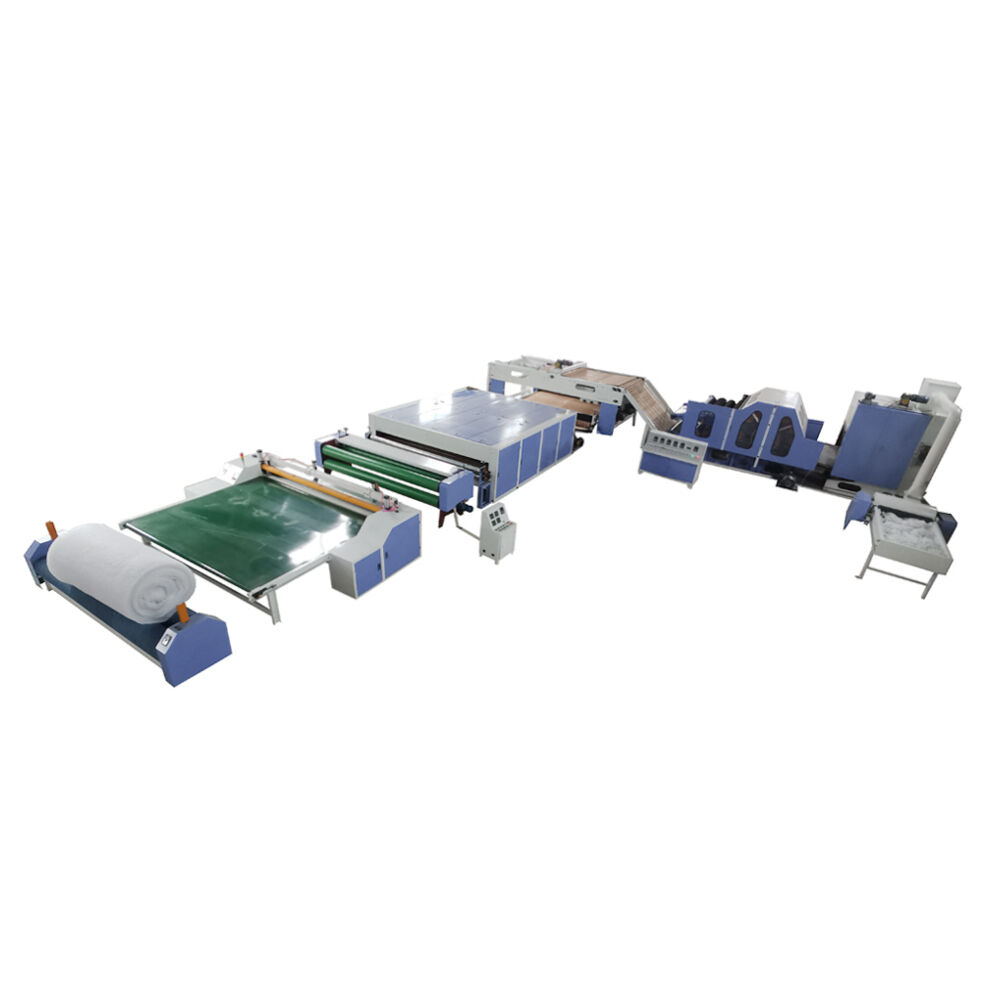
How Ultrasonic Embossing Works: Science, Mechanism, and Material Compatibility
The Physics of Cold-Form Embossing: High-Frequency Vibration and Molecular Friction
An ultrasonic machine generates mechanical vibrations above 20 kHz. These oscillations travel through a sonotrode into the material, inducing rapid intermolecular friction at the interface. This localized energy dissipation raises temperature just enough to soften thermoplastic polymers—without external heating. Precise control of amplitude and pressure ensures clean, repeatable deformation. Because heat generation is confined strictly to the embossing zone, surrounding areas remain cool and dimensionally stable—a key advantage over thermal methods.
Why Thermoplastics Respond Best: Localized Melting at Seam Interfaces Without Heat Damage
Thermoplastics are uniquely suited to ultrasonic embossing due to their reversible melting behavior. Vibrational energy triggers instantaneous, self-limiting melting only at the seam interface; once vibration stops, the polymer resolidifies within milliseconds. This eliminates overheating, scorching, or structural degradation common with thermosets or natural fibers. Unlike heated embossing—which requires lengthy cooling cycles—ultrasonic processing supports continuous, high-speed automation while preserving material integrity, surface aesthetics, and mechanical performance.
Key Benefits of the Ultrasonic Machine for Industrial Embossing
Energy Efficiency: 68% Less Power vs. Thermal Embossing (SME Manufacturing Efficiency Report 2023)
Ultrasonic embossing consumes 68% less power than conventional thermal systems, per the SME Manufacturing Efficiency Report 2023. By generating heat exclusively at the point of contact—not across entire platens or rolls—the process avoids energy waste from preheating, dwell time, and post-cycle cooling. This targeted energy delivery translates directly into lower operating costs and reduced carbon emissions—especially impactful in continuous nonwoven bonding lines where efficiency gains compound across thousands of cycles per hour.
Speed & Precision: Cycle Time Reduced from 8s to 1.2s via Servo-Controlled Ultrasonic Machine Integration
Servo-controlled ultrasonic machines reduce cycle time from 8 seconds to 1.2 seconds—an 85% improvement—by replacing heat-soak dwell with instantaneous vibration-driven bonding. Closed-loop servo systems deliver micron-level positioning accuracy and consistent pressure application, enabling crisp pattern transfer at speed. In applications like automotive interior panel embossing, this precision supports just-in-time production while maintaining ±0.05 mm depth tolerance across extended runs. Real-time feedback also allows immediate error detection, minimizing scrap without compromising throughput.
Proven Industrial Applications: Corsetry, Automotive Interiors, and Nonwovens
Luxury Apparel Case Study: 42% Defect Reduction on PU Leather Using Ultrasonic Embossing
A leading corsetry manufacturer replaced thermal embossing with ultrasonic technology for PU leather components—achieving a 42% reduction in defects. Primary failures—scorching, thinning, and pattern misalignment—were eliminated by eliminating bulk heating and relying instead on controlled, interface-specific melting. The material retained its soft hand and stretch recovery, while embossed patterns gained sharper definition and long-term durability. Combined with the 1.2-second cycle time enabled by servo integration, the upgrade boosted throughput and expanded design flexibility for structured garments requiring both aesthetic fidelity and biomechanical performance.
Automotive Tier-1 Shift: Why Higher CapEx Is Justified by Yield, Consistency, and Sustainability Gains
Tier-1 automotive suppliers increasingly adopt ultrasonic embossing—not despite its higher initial investment, but because it delivers measurable ROI across yield, consistency, and sustainability. Nonwovens used in headliners, seat covers, and insulation bond cleanly without adhesives or heat-induced warpage, raising first-pass yield. Closed-loop servo control maintains embossing depth within ±0.05 mm across tens of thousands of cycles, ensuring part-to-part uniformity critical for assembly-line fit. Sustainability advantages include 68% lower energy use versus thermal alternatives and full elimination of solvent-based adhesives—aligning with OEM mandates for lightweighting, recyclability, and end-of-life material recovery. These combined gains typically recover capital expenditure within 18 months.
FAQ
What is ultrasonic embossing?
Ultrasonic embossing uses high-frequency vibrations to induce mechanical friction in materials, creating patterns without the need for external heating.
Why are thermoplastics ideal for ultrasonic embossing?
Thermoplastics melt and resolidify easily under ultrasonic vibrations, allowing for precise, localized pattern creation without damaging the materials.
How does ultrasonic embossing save energy?
Ultrasonic embossing targets heat generation only at the point of contact, reducing waste and cutting energy consumption by up to 68% compared to thermal methods.
What industrial applications benefit from ultrasonic embossing?
Industries such as corsetry, automotive interiors, and nonwovens benefit from ultrasonic embossing due to improved precision, speed, and energy efficiency.