
 EN
EN
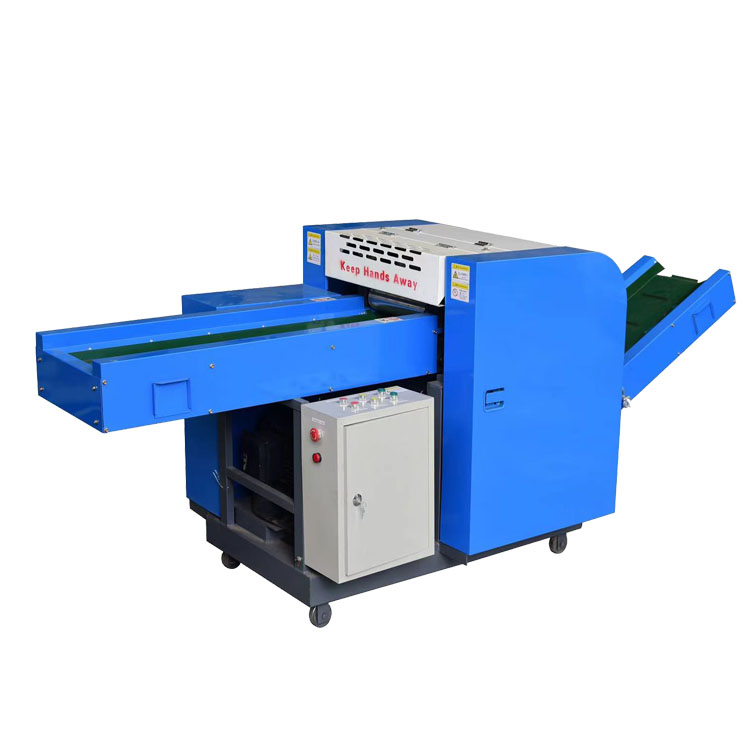
The Role of Textile Waste Recycling Machines in Closing the Loop
From Linear Disposal to Circular Material Recovery
The fashion sector’s conventional take-make-dispose model drives resource depletion and landfill overload. Textile waste recycling machines disrupt this cycle by transforming discarded garments and production cuttings into high-integrity feedstock for new textiles. These systems perform three core functions: shredding fabrics into manageable fractions, separating fibers by type and color using automated sensing, and reconstituting recovered fibers into usable yarns or nonwovens. Unlike downcycling or incineration, this process supports true circularity—restoring material value without relying on virgin inputs.
Quantifying Impact: 37% Lower Virgin Fiber Demand per Ton Processed
| Metric | Recycled Fiber | Virgin Material |
|---|---|---|
| Water Consumption | 95% Reduction | Baseline High |
| GHG Emissions | 4.2 Ton CO₂e | 5.8 Ton CO₂e |
| Non-renewable Resource Extraction | Limited | Significant |
For every metric ton of mechanically reclaimed polyester or cotton fiber, demand for virgin equivalents drops by approximately 37% (Circular Economy Institute, 2024). This displacement directly reduces pressure on ecosystems, energy grids, and water infrastructure. While mechanical recycling excels with mono-material streams, chemical recycling advances are now unlocking viability for blended fabrics—particularly the historically problematic polyester-cotton mixes that constitute nearly 70% of post-consumer textile waste.
How Textile Waste Recycling Machines Handle Real-World Feedstock Challenges
Mechanical Processing Workflow: Shredding, Sorting, and Fiber Reconstitution
Textile waste recycling machines must contend with heterogeneous inputs—zippers, buttons, dyes, and mixed fiber compositions. The mechanical workflow begins with robust shredding to reduce volume and expose fibers for separation. Automated sorting—powered by near-infrared (NIR) spectroscopy—then identifies and segregates materials by polymer type and color while ejecting non-textile contaminants. Finally, carding and drafting align the shredded fibers into continuous slivers ready for spinning. This method delivers consistent output for mono-fiber streams but faces inherent limits with blends.
The Blended Fabric Barrier: Why 68% of Post-Consumer Textiles Resist Mechanical Recycling
Fast-fashion’s reliance on performance-driven blends—especially cotton-polyester—creates a fundamental technical constraint. Mechanical processes cannot separate these chemically distinct fibers without compromising length, strength, or purity. As a result, roughly 68% of post-consumer textiles either downgrade into low-value insulation or require dilution with virgin fibers to meet performance standards. This bottleneck underscores why mechanical recycling alone cannot achieve full circularity—and why upstream design interventions (e.g., mono-material construction) and emerging chemical recycling pathways are essential complements.
Measurable Sustainability Gains Enabled by Textile Waste Recycling Machines
Textile waste recycling machines deliver verified environmental improvements across key impact categories—most notably carbon emissions and freshwater use—when integrated into industrial-scale operations.
Carbon Reduction: 4.2 Ton CO₂e Avoided per Ton of Recycled Cotton
Life cycle analysis confirms that recycling one ton of post-industrial cotton avoids 4.2 tons of CO₂e, compared to conventional virgin production (Ellen MacArthur Foundation, 2019). This reduction stems from eliminating emissions-intensive stages: cotton cultivation (including methane from flooded fields), ginning, and energy-heavy spinning. Crucially, it bypasses agricultural pesticide use and irrigation-related energy inputs—making recycled cotton one of the most effective levers for decarbonizing apparel supply chains.
Resource Conservation: 95% Less Water vs. Virgin Cotton Production
Recycled cotton production consumes just 5% of the water required for virgin cotton—approximately 1,000 gallons per ton versus 20,000 gallons (Ellen MacArthur Foundation, 2019). This dramatic conservation preserves aquifer integrity and reduces runoff contamination from agricultural chemicals. Energy use also falls by 50–75% across processing stages, while chemical inputs drop to minimal levels—reflecting the inherent efficiency of reprocessing existing polymers rather than synthesizing new ones.
Scaling Textile Waste Recycling Machines: Infrastructure and Feedstock Realities
The Critical Sorting Gap: Only 12% of Facilities Accurately Identify Multi-Fiber Blends
A textile waste recycling machine’s effectiveness is constrained not by its engineering—but by the quality of input it receives. Yet current sorting infrastructure remains severely underdeveloped: only 12% of sorting facilities can reliably distinguish multi-fiber blends using NIR or hyperspectral imaging. The rest misclassify blended garments as single-fiber streams, triggering contamination, yield loss, and operational downtime downstream. Without scalable, high-accuracy sorting—deployed at collection, resale, and pre-recycling stages—the full potential of advanced recycling machinery remains unrealized. Bridging this gap is not optional; it is the foundational prerequisite for scaling circular textile systems.
FAQ
What are textile waste recycling machines?
Textile waste recycling machines are systems designed to transform discarded garments and production cuttings into feedstock for new textiles. They perform functions like shredding, sorting, and fiber reconstitution.
How do textile waste recycling machines contribute to sustainability?
These machines reduce the demand for virgin fibers, lower greenhouse gas emissions, and conserve water. By recycling textiles, they support circular material recovery and decrease environmental impact.
What challenges do textile waste recycling machines face?
The machines face challenges with heterogeneous inputs such as zippers, buttons, dyes, and mixed fiber compositions, particularly with cotton-polyester blends.
Table of Contents
- The Role of Textile Waste Recycling Machines in Closing the Loop
- How Textile Waste Recycling Machines Handle Real-World Feedstock Challenges
- Measurable Sustainability Gains Enabled by Textile Waste Recycling Machines
- Scaling Textile Waste Recycling Machines: Infrastructure and Feedstock Realities
- FAQ