 EN
EN
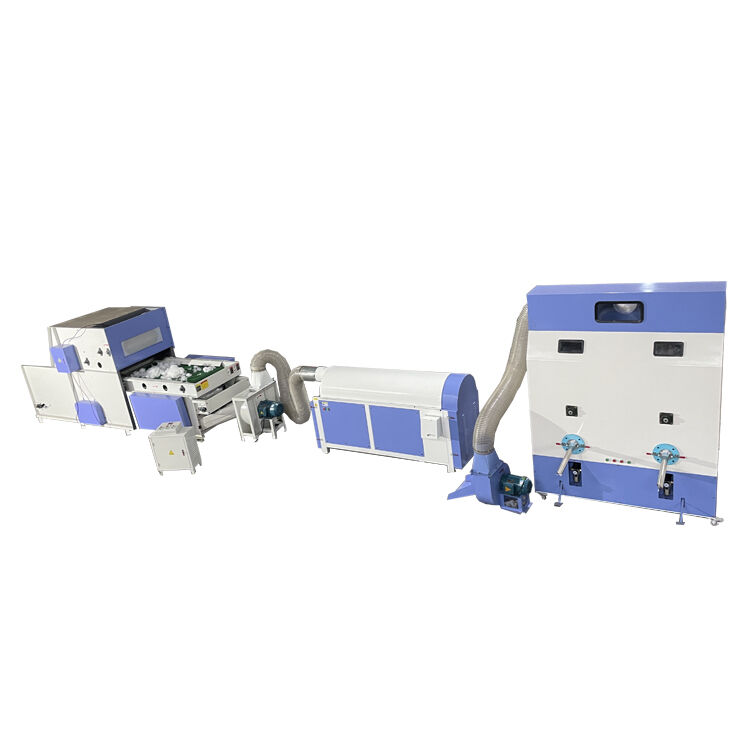
Materialspezifische Kalibrierung von Füllmaschinen für Fasern
Optimierung der Förderparameter für synthetische Fasern, Daunen und Memory-Schaum
Synthetische Fasern – wie Polyester und Polypropylen – verhalten sich aufgrund ihrer einheitlichen Fadenlänge und geringen Kompressibilität vorhersehbar. Bei diesen Materialien müssen Vorschubgeschwindigkeit und Walzenspalt kalibriert werden, um Überfütterung oder Verheddern zu vermeiden, ohne die Durchsatzleistung einzuschränken. Im Gegensatz dazu erfordern Daunenfedern eine schonendere Handhabung: Eine zu hohe Walzengeschwindigkeit beschädigt die empfindlichen Daunenästchen und verringert die Auflockerung. Memory-Schaum-Stücke benötigen die langsamste und kontrollierteste Vorschubgeschwindigkeit, um Verklumpungen zu vermeiden und eine gleichmäßige Verteilung sicherzustellen.
Die Kalibrierung beginnt mit kleinen Testchargen. Die Bediener messen Gewicht und Dichte der Ausgabe und stellen anschließend die Schneckenförderergeschwindigkeit oder die Amplitude des Vibrationsförderers entsprechend fein ein. Die Dokumentation dieser Basiseinstellungen pro Material gewährleistet die Wiederholbarkeit über Schichten und Produktionsläufe hinweg. Da sich die Luftfeuchtigkeit je nach Jahreszeit auf den Feuchtigkeitsgehalt der Fasern – und damit auf ihr Fließverhalten – auswirkt, ist eine regelmäßige Neukalibrierung unerlässlich. Durch die Anpassung der Förderparameter an die physikalischen Eigenschaften jedes Materials reduzieren Hersteller Abfall und gewährleisten eine konsistente Füllqualität über alle Produktlinien hinweg.
Anpassung des pneumatischen Drucks und der Fördergeschwindigkeit anhand von Faserdichte und Kompressibilität
Der pneumatische Druck und die Fördergeschwindigkeit müssen auf die Dichte und Kompressibilität eines Materials abgestimmt sein, um eine gleichmäßige Füllverteilung zu erreichen. Materialien mit geringer Dichte wie Daunen erfordern einen reduzierten Luftdruck, um eine Zerstreuung zu verhindern; dichtere Schredder aus Memory-Schaum benötigen hingegen einen höheren Druck, um zuverlässig durch das System transportiert zu werden. Die Fördergeschwindigkeit sollte sich umgekehrt zur Kompressibilität verhalten: Hochkompressible Fasern profitieren von langsameren Geschwindigkeiten, um Hohlräume in der Füllkammer zu minimieren.
Ein strukturierter Kalibrierungsprozess umfasst das Durchlaufen eines kurzen Produktionszyklus, das Messen des Füllgewichts an mehreren Kavitätspunkten sowie die Anpassung der Druckregler oder frequenzgesteuerten Antriebe basierend auf Echtzeitdaten. Beispielsweise erfordert der Wechsel von synthetischer Faser zu geschreddertem Schaum typischerweise eine Reduzierung der Fördergeschwindigkeit um 30 % und eine Erhöhung des pneumatischen Drucks um 15 %. Das Erfassen dieser validierten Einstellungen pro Material ermöglicht schnelle, fehlerfreie Produktwechsel und eine konstante Produktqualität – ohne auf die Intuition des Bedieners angewiesen zu sein.
Produktspezifische Konfiguration der Faserauffüllmaschine
Präzise Steuerung von Füllgewicht und Fülldichte bei verschiedenen Kissenarten und -größen
Eine konsistente Füllmenge und Fülldichte sind unverzichtbar bei der Herstellung verschiedener Kissenarten – von Standard-Bettkissen bis hin zu orthopädischen Halswirbelkissen. Moderne Faserauffüllmaschinen nutzen gravimetrische Rückkopplungssysteme, um eine Füllgenauigkeit von ±1 % über unterschiedliche Abmessungen und Faserzusammensetzungen hinweg sicherzustellen. Diese Präzision beruht auf drei integrierten Funktionen:
- Echtzeit-Messung mittels Lastzellen während jedes Auffüllzyklus
- Automatische Kompensation für Unterschiede in der Faserkompressibilität (z. B. Daunen vs. Memory-Schaum)
- Dynamische Anpassung der Auffüllgeschwindigkeit basierend auf Hohlraumvolumen und Geometrie
Hersteller berichten nach Implementierung dieser Steuerfunktionen über eine Batch-zu-Batch-Konsistenz von 98 % – wodurch unterfüllte Einheiten und ungleichmäßige Produkte eliminiert sowie Materialverschwendung um bis zu 17 % reduziert wird.
Modulare Düsen-Systeme für schnelle, wiederholbare Wechsel zwischen Produktlinien
Der Wechsel zwischen verschiedenen Kissenlinien – beispielsweise Reise-, Körper- und medizinischen Stützkissen – erfordert eine präzise Düsenausrichtung, um unterschiedliche Füllöffnungsgrößen und Hohlraumgeometrien zu berücksichtigen. Modulare Schnellwechseldüsen-Systeme ermöglichen es Bedienern, Füllköpfe in weniger als 90 Sekunden ohne Werkzeug auszutauschen – im Vergleich zu über 15 Minuten bei herkömmlichen Gewindeverbindungen. Zu den wichtigsten Merkmalen zählen:
- Farbkodierte magnetische Ausrichtung für fehlerfreie Positionierung
- Standardisierte Druckluftkupplungen, die die pneumatische Integrität bei jedem Austausch bewahren
- Voreingestellte volumetrische Kalibrierungsprofile, die direkt mit jeder Düsenkonfiguration verknüpft sind
Dieser Ansatz reduziert die Rüstzeit um 86 % und gewährleistet identische Füllmuster bei wiederholten Durchläufen – was eine agile, hochgradig variantenreiche Produktion ohne Einbußen bei der Füllgenauigkeit ermöglicht.
Integrierte intelligente Automatisierung zur Echtzeit-Optimierung von Faserauffüllmaschinen
Intelligente Automatisierung verwandelt faserauffüllmaschinen in adaptive Systeme, die in Echtzeit auf Produktionsvariablen reagieren. IoT-Sensoren überwachen kontinuierlich die Fülldichte, die Gewichtsgenauigkeit und die Materialflussraten – und lösen automatisch Anpassungen des Düsendrucks und der Fördergeschwindigkeit während des Zyklus aus. Diese dynamische Reaktion verhindert Unter- oder Überfüllung und berücksichtigt plötzliche Änderungen im Materialverhalten – wie unerwartete Schwankungen bei der Kompressibilität synthetischer Fasern –, ohne die Produktion anzuhalten.
Prädiktive Wartungsalgorithmen analysieren Schwingungs- und Temperaturprofile, um Komponentenausfälle bis zu 72 Stunden im Voraus vorherzusagen und so ungeplante Ausfallzeiten um 40 % zu reduzieren [Verpackungseffizienzbericht 2023]. Gleichzeitig verfeinert maschinelles Lernen die Kalibrierungslogik für verschiedene Kissenarten und Anwendungen im Bereich Polstermöbel, wodurch eine Füllgewichtsgenauigkeit von ±1,5 % trotz natürlicher Schwankungen in der Faserhöhe (Loft) und wechselnder Umgebungsbedingungen aufrechterhalten wird.
Bereit, Ihre Präzision bei der Faserauffüllung mit industriell kalibrierten Maschinen zu optimieren?
Eine Hochleistungs-Füllmaschine für Fasern ist das Rückgrat einer konsistenten und kosteneffizienten Herstellung von Heimtextilien – keine Produktionsstrategie kann eine fehlerhafte Kalibrierung, ineffiziente Arbeitsabläufe oder eingeschränkte Materialanpassungsfähigkeit kompensieren. Durch die Anpassung der Maschineneinstellungen an die Eigenschaften der verwendeten Fasern, den Einsatz eines modularen Designs für flexible Umrüstungen sowie die Integration intelligenter Automatisierung zur Echtzeit-Optimierung erreichen Sie eine beispiellose Füllgenauigkeit, ein Minimum an Abfall und eine zuverlässige Durchsatzleistung für alle Ihre B2B- und OEM-Aufträge.
Für industrielle Füllmaschinen für Fasern, die vollständig auf synthetische Fasern, Daunen, Memory-Schaum und andere Spezialmaterialien kalibriert sind, oder um eine komplette Produktionslinie für Heimtextilien mit ergänzenden Kissen-, Decken- und Matratzenmaschinen aufzubauen: Partneren Sie mit einem Hersteller, der auf globale B2B- und OEM-Erfolge ausgelegt ist. Qingdao Seanoel Industry And Trade Co., Ltd. verfügt über 20 Jahre branchenspezifische Erfahrung in Forschung, Entwicklung und Fertigung von Maschinen für Heimtextilien und bietet vollständig anpassbare Anlagen, durchgängige Produktionssysteme sowie weltweiten Kundendienst rund um die Uhr. Kontaktieren Sie uns noch heute für ein unverbindliches Beratungsgespräch, um Ihre Kalibrierungsstrategie für Füllmaschinen zu optimieren, ein individuelles Angebot zu erhalten und zu erfahren, wie unsere Maschinen Ihre Fertigungskapazitäten für globale B2B- und OEM-Märkte steigern können.
Häufig gestellte Fragen
Warum ist eine Kalibrierung für Faselfüllmaschinen erforderlich?
Die Kalibrierung stellt eine optimale Leistung und konsistente Produktqualität sicher, indem die Maschineneinstellungen an die spezifischen physikalischen Eigenschaften der verwendeten Materialien angepasst werden. Sie hilft zudem, Abfall zu minimieren und Änderungen des Fasergehalts an Feuchtigkeit zu berücksichtigen, die das Fließverhalten beeinflussen können.
Welche Vorteile bieten modulare Düsen-Systeme?
Modulare Düsen-Systeme ermöglichen schnelle und fehlerfreie Wechsel zwischen Produktlinien, reduzieren die Stillstandszeiten um bis zu 86 % und gewährleisten konsistente Füllmuster bei verschiedenen Kissenarten.
Wie verbessert intelligente Automatisierung die Effizienz von Faserfüllmaschinen?
Intelligente Automatisierung nutzt IoT-Sensoren und Algorithmen für vorausschauende Wartung, um Maschineneinstellungen in Echtzeit automatisch anzupassen und Ausfälle von Komponenten vorherzusagen, wodurch Stillstandszeiten reduziert und eine hohe Genauigkeit trotz Veränderungen der Materialeigenschaften aufrechterhalten wird.
Welche Anpassungen sind beim Wechsel der Materialien erforderlich?
Bei einem Wechsel der Materialien – beispielsweise von synthetischen Fasern zu Memory-Schaum-Stückchen – müssen die Bediener die Fördergeschwindigkeit, den pneumatischen Druck und andere Einstellungen entsprechend der Dichte und Kompressibilität anpassen, um eine gleichmäßige Füllverteilung und Produktkonsistenz sicherzustellen.
Inhaltsverzeichnis
- Materialspezifische Kalibrierung von Füllmaschinen für Fasern
- Produktspezifische Konfiguration der Faserauffüllmaschine
- Integrierte intelligente Automatisierung zur Echtzeit-Optimierung von Faserauffüllmaschinen
- Bereit, Ihre Präzision bei der Faserauffüllung mit industriell kalibrierten Maschinen zu optimieren?
- Häufig gestellte Fragen