 EN
EN
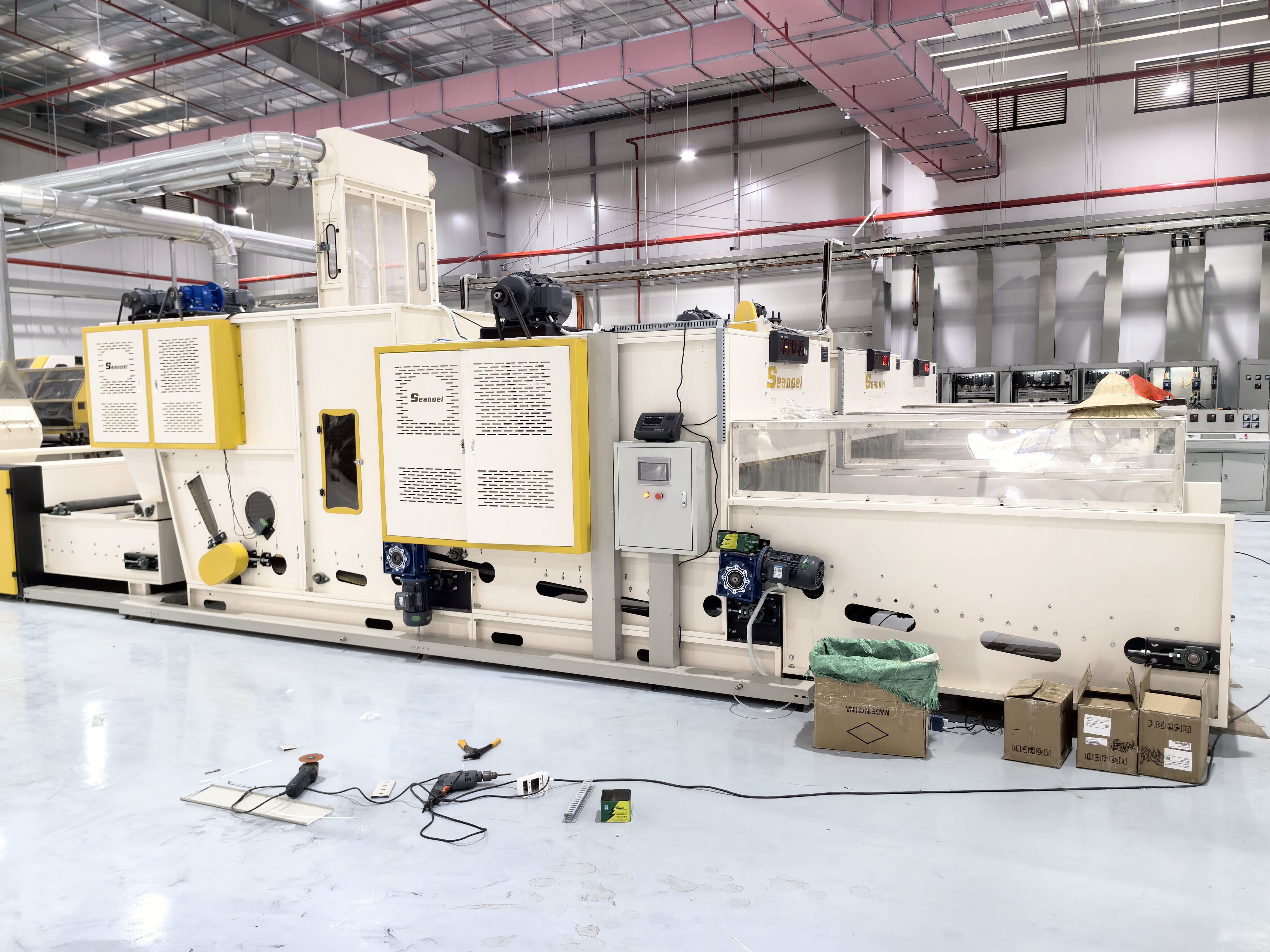
The first set clothing padding spray glue production line in Asia that uses duck down as raw material,Duck down raw material account for 60%.
With the global wave of green,high-end,and intelligent transformation in the textile and apparel industry,technological innovation in the production of high-end thermal insulation fillers has become a core direction for breaking through development bottlenecks.After 18 months of in-depth collaboration, Seanoel successfully built Asia’s first spray glue production line for animal down-based apparel fillers for TMVW, a subsidiary of a multinational listed company in Vietnam. From solution consultation,design,R&D to manufacturing,installation,finally successful trial runs, the entire process was executed efficiently.The project achieved stable,large-scale production of fillers with a 60% high-proportion duck down mix,filling a technological gap in the industry and providing a brand-new solution for global high-end thermal apparel manufacturing.
This collaboration began with an alignment of deep needs with TMVW Vietnam. As a core overseas production base for a multinational listed enterprise, TMVW is deeply rooted in high-end apparel manufacturing. Committed to creating products that balance warmth, comfort, and durability, they urgently needed to break through the limitations of traditional filler production processes. Traditional spray glue lines, designed mostly for chemical fiber, could not adapt to the physical properties of animal down. Specifically, mixing high-proportion duck down posed common industry challenges: uneven fluff dispersion, weak adhesive bonding, high material loss, and failure to meet loft and warmth standards. To achieve independent production of high-end thermal fillers, TMVW Vietnam commissioned us to customize an exclusive automated production line, marking the start of an 18-month journey of technical research and project implementation.
In the early stages, the solution consultation phase served as the cornerstone of success. We assembled a specialized technical team that traveled to Vietnam for on-site inspections. We deeply researched TMVW’s workshop layout, capacity needs, quality standards, and the local production environment. Through multiple rounds of in-depth discussions with TMVW’s technical and management teams, we addressed the core metric of 60% high-proportion duck down. We analyzed the characteristics of duck down—fluffy, lightweight, prone to clustering, and with fine fibers—identifying technical difficulties across the entire process. After dozens of optimizations considering compliance, logistics, and maintenance, we finalized an innovative and stable production line plan, which lays a solid foundation of the subsequent design.
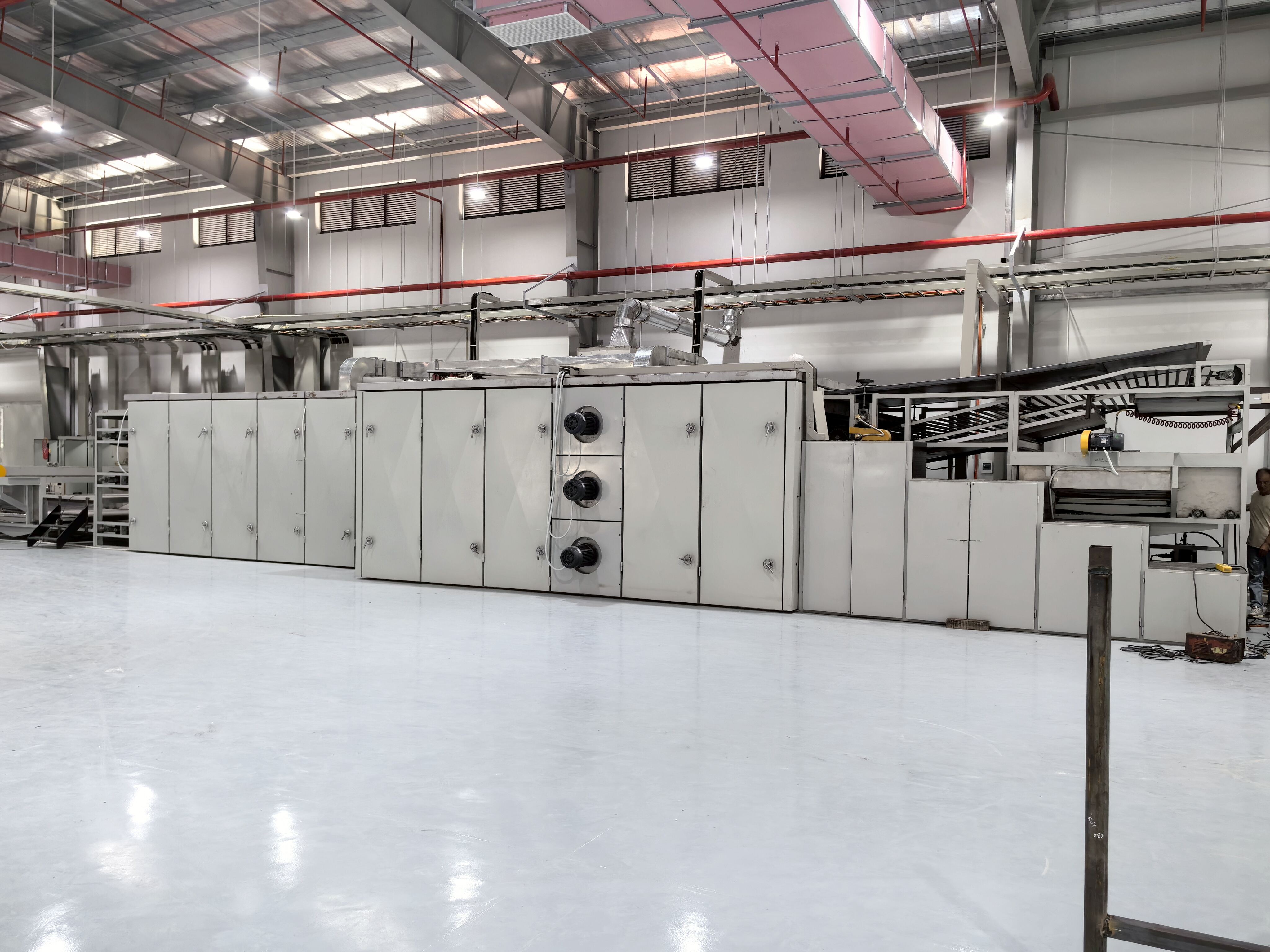
Entering the core design and R&D phase, the technical team confronted the industry's long-standing challenge of high-proportion animal down mixing and spray gluing, launching comprehensive technological innovations. To address the issues of duck down clumping and uneven dispersion, we developed an exclusive down pre-treatment and automatic dispersion system. Through precise temperature control, gentle loosening, and constant-speed conveying, we achieved uniform mixing of 60% duck down with other auxiliary materials, completely eliminating clumping and distribution imbalances. We optimized the spray gluing process and equipment structure, adopting high-precision electrostatic spraying technology to accurately control glue volume, spray angle, and coverage area. This ensures strong bonding while avoiding excess glue that would compromise loft, or insufficient glue that leads to shedding. Simultaneously, we established a full-process automated control system, achieving seamless integration of feeding, mixing, spraying, drying, forming, and winding, with real-time monitoring of production parameters to guarantee stability. Throughout the R&D process, the team overcame multiple technical bottlenecks, completing hundreds of performance tests and process optimizations to ensure the production line fully met the requirements for high-proportion duck down fillers, with all technical indicators reaching TMVW's rigorous quality standards.
During the manufacturing, installation, and commissioning phase, the project team strictly adhered to high-quality delivery standards, coordinating equipment production, component processing, quality inspection, and cross-border logistics. In the production phase, we selected premium, eco-friendly, wear-resistant raw materials and processed them with precision according to design drawings. Every component underwent multiple quality inspections to ensure robust equipment quality. Anticipating the local production environment in Vietnam, we pre-optimized the equipment for corrosion resistance, moisture proofing, and compatibility with local power standards to guarantee long-term stability. Upon arrival at the TMVW production base, our professional installation team was dispatched for on-site work, efficiently completing assembly, wiring, and system debugging. Concurrently, we provided comprehensive technical training to TMVW operators covering equipment operation, routine maintenance, and troubleshooting, empowering the client to quickly master the production line.
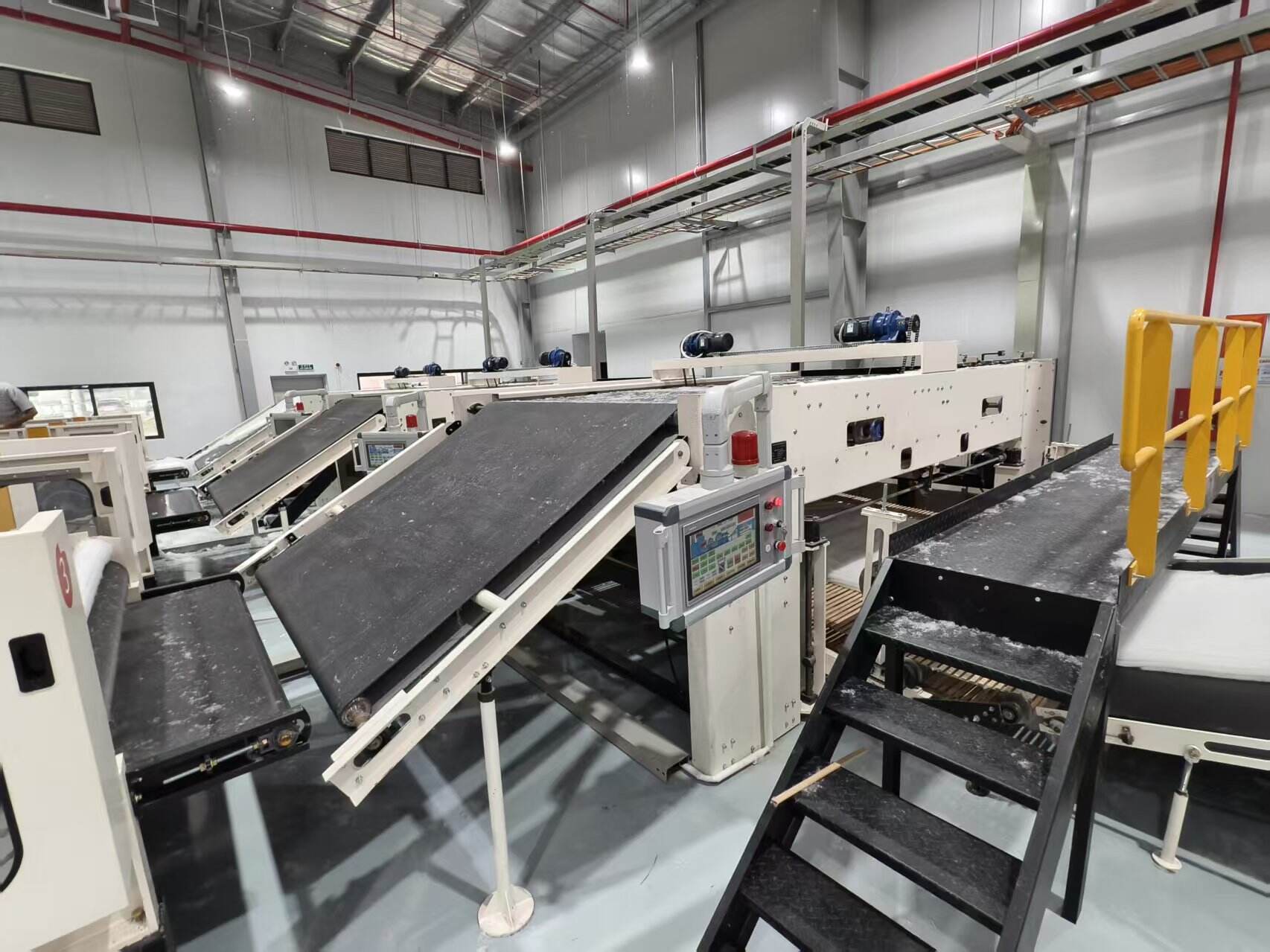
Following rigorous installation and debugging, the entire spray glue production line successfully entered the trial run phase. Throughout the process, the line operated with stability, successfully producing the 60% high-proportion duck down mixed apparel filler. Inspections confirmed that the product featured uniform down distribution, strong bonding, excellent loft, and superior thermal performance. It fully met the quality requirements for high-end apparel production, with all production metrics reaching design standards, successfully passing TMVW's final acceptance.
The successful implementation of Asia's first animal down apparel filler spray glue production line represents not only a major technological breakthrough in our high-end textile equipment R&D but also empowers TMVW Vietnam to achieve independent, large-scale production of high-end thermal fillers, significantly enhancing their core product competitiveness and market influence. Compared to traditional processes, this production line effectively reduces down loss, improves production efficiency, and ensures high product quality and stability, driving the upgrade of high-end apparel filler production from chemical fibers to animal down.
This successful delivery, the result of 18 months of deep collaboration, is a testament to the shared professionalism, trust, and innovative spirit of both parties. In the future, Seanoel will continue to deeply cultivate the textile equipment R&D sector, focusing on frontier industry technologies and core customer needs. We will constantly break through technical barriers to provide global clients with more customized, intelligent, and high-end production solutions, assisting the textile and apparel industry in achieving higher-quality innovative development.